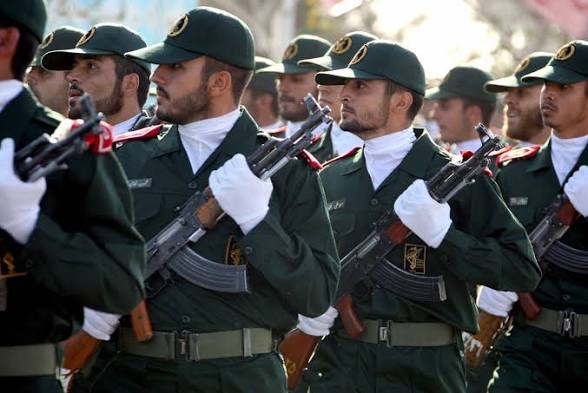
Security and intelligence assessments up to mid-2026 indicate that the presence of the Iranian Revolutionary Guard, specifically the “Quds Force,” in the Central Asian republics (Kazakhstan, Kyrgyzstan, Tajikistan, Uzbekistan, and Turkmenistan) represents a model of hybrid intelligence operations rather than an active terrorist network carrying out routine deadly attacks.
With rising regional tensions, this presence remains a “latent threat” that relies more on soft influence and proxy-building than on direct armed operations.
Iran’s Priorities: Intelligence and Influence Building
The Quds Force in Central Asia focuses on an unconventional warfare strategy aimed at advancing Iranian interests without the need for direct military confrontation. This strategy is reflected in several areas:
Building proxy networks: Iran seeks to develop loyal militias by recruiting local elements or utilizing the expertise of the “Fatemiyoun Brigade” (composed of Afghan fighters) who have returned from the battlefronts in Syria. These individuals represent “sleeper cells” that can be activated if tensions escalate with the Taliban or local governments.
Exploiting cultural and religious ties: The Quds Force of the Iranian Revolutionary Guard is considered highly skilled in exploiting linguistic connections (especially with Persian-speaking Tajikistan), diaspora communities, charitable institutions, and front companies, which are used as cover for recruitment, surveillance, and intelligence-gathering activities.
The Real Threats: Where Does the Danger Lie?
Unlike regions such as the Middle East or Azerbaijan, where cells linked to the Revolutionary Guard that were planning assassinations or attacks against Western and Jewish targets have been dismantled, evidence of similar plots in Central Asia remains limited.
However, experts believe that the “Revolutionary Guard threat” in the region is structural in nature and could emerge in the event of a broad Iranian-Western conflict. There are concerns that these networks could become tools of sabotage, whether by targeting energy infrastructure, attacking Western interests, or even supporting political opponents to undermine governments allied with the West.
There are also smuggling networks, which are used to facilitate the trafficking of weapons, money, and fighters across porous borders, indirectly affecting the security of the region as a whole.
Regional Challenges: A Conflict of Interests
The activities of the Revolutionary Guard in Central Asia face significant structural obstacles, most notably that Central Asian governments possess secular security institutions that are highly vigilant against any foreign infiltration, especially if it carries an ideological character that could threaten the stability of their regimes.
These countries also place their relations with Russia (as a historical security guarantor), China (as a key economic partner), and Turkey (as a cultural ally) at the forefront of their priorities, thereby reducing the room available for Iran to operate freely.
The Real Threat: Sunni Extremism and ISIS-Khorasan
Contrary to what some may believe, the most prominent terrorist threat in Central Asia continues to originate from Sunni jihadist groups such as “ISIS-Khorasan” and the remnants of the “Islamic Movement of Uzbekistan.”
Here lies the paradox: Iran’s indirect intervention in Afghanistan (through supplying weapons to certain factions) may contribute to fueling instability, creating a fertile environment for these jihadist groups to expand and target the Central Asian republics, which have themselves become potential targets for cross-border attacks.
Final Assessment: A Concealed “Hybrid Threat”
The threat associated with the Revolutionary Guard in Central Asia is assessed as “low-level, but existing.” It is not aimed at causing immediate human casualties in Central Asian cities; rather, it seeks to establish long-term strategic influence, provide leverage in regional crises, and facilitate espionage and tactical sabotage operations when needed.
Observers believe that coordination between local intelligence agencies and international security reporting (such as U.S. National Intelligence assessments) remains the most effective tool for curbing these activities.
In the absence of direct confrontation, Iran will continue to rely on “hybrid operations” and “sectarian and political exploitation” to secure a foothold in the Eurasian heartland, while the Central Asian states remain in a state of cautious balance between preserving their sovereignty and managing the multiple pressures exerted by major regional powers.
In conclusion, the Iranian Revolutionary Guard’s “cells” in this region do not operate as armies or suicidal terrorist cells; rather, they function as silent intelligence instruments whose role is to monitor, leak information, and expand influence under the cover of diplomatic, religious, or commercial activity, making them more difficult to track and requiring continuous security vigilance.