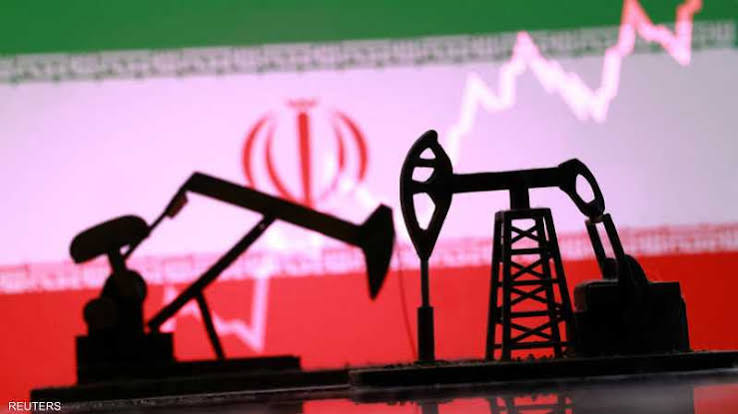
Global energy markets are among the sectors most sensitive to geopolitical tensions, and the Iranian issue has emerged as one of the most significant factors affecting the stability of these markets over recent decades.
Consequently, any political or military escalation involving Tehran is directly reflected in oil and gas prices, raising concerns among investors and energy-consuming countries about the security of supplies and the stability of markets.
The importance of this issue has increased in recent years with the escalation of tensions between Iran and the United States, the growing indirect confrontations between Iran and several regional powers, as well as attacks targeting oil facilities and commercial vessels in the Gulf.
This has reinforced the belief among many Western governments and international economic institutions that Iranian conduct has become one of the leading sources of uncertainty in global energy markets.
According to data from the U.S. Energy Information Administration, between 20 and 21 million barrels of oil and petroleum products pass daily through the Strait of Hormuz, representing approximately 20% of global petroleum liquids consumption.
A significant portion of liquefied natural gas exports from Qatar, one of the world’s largest LNG exporters, also passes through the strait. Therefore, any threat to navigation through this vital waterway immediately raises market concerns over the possibility of widespread disruptions to global energy supplies.
Over the past years, Iran has been associated with several crises that have directly affected international energy flows. In 2019, several oil tankers were attacked in the Gulf of Oman near the Strait of Hormuz. The United States and its allies accused Tehran of responsibility, an allegation that Iran denied.
In the same year, facilities belonging to Saudi Aramco, the world’s largest oil company, were attacked, temporarily disrupting approximately 5.7 million barrels per day of Saudi oil production, equivalent to nearly 5% of global supplies at the time.
This caused the largest single-day increase in oil prices in decades, with Brent crude rising by more than 14% during a single trading session.
The impact of Iranian tensions is not limited to direct security risks but also extends to the psychological factors that govern financial market behavior. Oil prices are influenced not only by the quantities actually produced or lost, but also by investors’ expectations regarding future risks.
Therefore, Iranian statements concerning the Strait of Hormuz or warnings related to confrontation with the United States or Israel often lead to an increase in the geopolitical risk premium added to energy prices, even in the absence of any actual disruption to supplies.
Reports by international financial institutions indicate that the possibility of the closure of the Strait of Hormuz or disruptions to navigation through it represents one of the most alarming scenarios for global energy markets.
The World Bank and the International Monetary Fund have warned on various occasions that any large-scale disruption could trigger new waves of global inflation as a result of rising oil and gas prices.
This warning has gained particular significance following the shocks experienced by global markets after the Russia-Ukraine war, which demonstrated the extent to which energy prices are linked to inflation rates and economic growth worldwide.
On the other hand, Iran claims that its presence in the Gulf is intended to protect regional security and that it does not seek to disrupt international trade.
The Iranian leadership also believes that Western pressure and sanctions have compelled it to adopt more hardline policies on certain issues. Tehran maintains that maritime security should be the responsibility of the countries of the region rather than external powers.
However, several Western and Arab governments present a different perspective. The United States, which maintains a permanent military presence in the Gulf to protect international trade routes, considers the repeated threats to close the Strait of Hormuz and the use of armed groups allied with Iran in various parts of the Middle East to be major factors contributing to the destabilization of energy markets.
Oil-producing Gulf states also believe that the continuation of tensions associated with Iranian policies increases insurance and maritime shipping costs while raising the operational risks faced by global energy companies.
These tensions are also reflected in long-term investment decisions. Global oil and gas companies prefer to operate in politically and security-stable environments, whereas recurring crises increase uncertainty.
This has prompted many energy-consuming countries to accelerate efforts to diversify their sources of supply and reduce dependence on sensitive maritime routes in the Gulf.
Oil-producing countries such as Saudi Arabia and the United Arab Emirates have also invested in alternative pipeline networks that reduce reliance on the Strait of Hormuz for exporting part of their production.
From a broader economic perspective, any sharp and sustained increase in energy prices affects transportation, industrial, and agricultural production costs, leading to higher global inflation rates.
The experiences of recent years have shown that emerging markets and energy-importing countries are the most affected by these fluctuations due to their heavy reliance on oil and gas imports to meet their economic needs.
The impact of Iranian tensions is not confined to Iran or the Gulf region but extends to the global economy as a whole through energy markets.