
Ahwaz is witnessing a new wave of security and judicial escalation with the confirmation of death and prison sentences against a number of Ahwazi activists and citizens, according to documentation by the Ahwazi Organization for Human Rights, which warned of a serious deterioration in the human rights situation and the exploitation of regional tensions to accelerate the pace of repression.
The Ahwazi Organization for Human Rights confirmed that Iranian judicial and security measures against Ahwazi activists and citizens are experiencing a noticeable escalation, amid accusations that the authorities are exploiting the tense regional situation to tighten their security grip and expand the scope of political prosecutions.
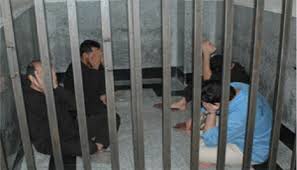
In the latest of these developments, the Ahwazi Organization for Human Rights revealed that the occupation judiciary had ratified the death sentences issued against three Ahwazi political detainees held in Sheiban Prison in the city of Ahwaz: teacher and cultural activist Alireza Merdasi, along with Masoud Jamei and Farshad Etemadi Far.
The organization explained that the confirmation of the death sentence against Merdasi in particular sparked a wide wave of condemnation in educational and cultural circles, given that he works in the educational sector and is known for his cultural activities.
The occupation judiciary had previously sentenced him to death twice, in addition to one year of imprisonment, based on charges including “corruption on earth,” “membership in groups opposed to the regime,” and “propaganda against the regime.”
The Ahwazi Organization for Human Rights believes that these rulings reflect the continued reliance of the Iranian occupation authorities on political trials that lack standards of justice and transparency, noting that the detainees were deprived of fundamental legal guarantees and opportunities for independent defense at a time when international calls for intervention to halt the implementation of the sentences are increasing.
In a related context, the organization expressed new concerns regarding the fate of four Ahwazi citizens who were arrested by Iranian security agencies during the past month of March, coinciding with the atmosphere of military escalation in the region.
According to information documented by the Ahwazi Organization for Human Rights, three of the detainees are Bahader Al-Zarqani, Mansour Al-Nasseri, and Amin Al-Nasseri, all from the city of Ahwaz.
The information documented by the organization indicates the continuation of a complete blackout regarding the conditions of these detainees, while their families are deprived of knowing their places of detention or the nature of the charges brought against them, in addition to being prevented from obtaining legal representation.
The organization also fears that they may be subjected to rapid and secret trials that could result in severe sentences, especially in light of similar precedents witnessed in the region during periods of military tension.
The organization confirms that the security authorities of the occupation resort in such cases to bringing accusations related to espionage, cooperation with foreign entities, or harming national security, accusations which the organization says are often linked to confessions obtained under pressure inside detention centers.
On the other hand, the Ahwazi Organization for Human Rights pointed to the continued issuance of prison sentences by Iranian judicial authorities against Ahwazi citizens on the basis of activities related to freedom of expression or participation in popular protests.
The Sixteenth Branch of the Ahwaz Court of Appeals upheld a ruling sentencing citizen Mohammad Al-Asadi to two years in prison on charges of “disrupting public order.”
Al-Asadi was arrested in January 2026, while the Court of Appeals maintained the prison sentence despite canceling some supplementary penalties that included a travel ban and mandatory periodic reporting to official authorities.
The Ahwazi Organization for Human Rights considers the case to be a new example of the use of the judiciary to pursue activists and holders of dissenting opinions, considering that his continued detention falls within a broader policy aimed at restricting public freedoms and silencing critical voices.
At the same time, the organization drew attention to the case of Ahwazi civil and cultural activist Hassan Maslawi after the occupation authorities officially informed him of the final death sentence issued against him inside Sheiban Prison.
Maslawi’s arrest dates back to 2022, before the occupation court in the city of Ma’shour issued an in absentia death sentence against him in August 2023, based on unfounded accusations.
The organization stated that the Supreme Court affiliated with the Iranian occupation authorities upheld the ruling in March 2025, but the authorities did not officially notify him until a long time later, which increased concerns regarding his fate.
Maslawi is considered one of the well-known activists in both the civil and cultural fields. Over the past years, he has also been subjected to several campaigns of arrest and persecution because of his social and cultural activities.
Information documented by the organization indicates that he previously faced multiple accusations related to participation in protests and civil activity and remained detained for long periods despite decisions ordering his temporary release.
The Ahwazi Organization for Human Rights believes that the coincidence of these cases within a short period reflects a clear escalation in the policy of dealing with the Ahwazi file, whether through death sentences, prolonged arrests, imprisonment, or judicial rulings related to freedom of expression and civil activity.
The organization also warned that the continuation of these measures could lead to further tension inside Ahwaz amid growing concerns about the exploitation of regional conflicts and security conditions to justify the tightening of exceptional measures and the acceleration of political trials.
At a time when calls directed to the United Nations and international human rights organizations for urgent intervention are increasing, the Ahwazi Organization for Human Rights confirms that the fate of dozens of Ahwazi detainees and activists remains suspended between death sentences, prisons, and secret trials, amid ongoing demands to halt these measures and ensure fair and transparent trials in accordance with international standards, in a case that has become one of the most prominent human rights issues in Ahwaz during the current period.