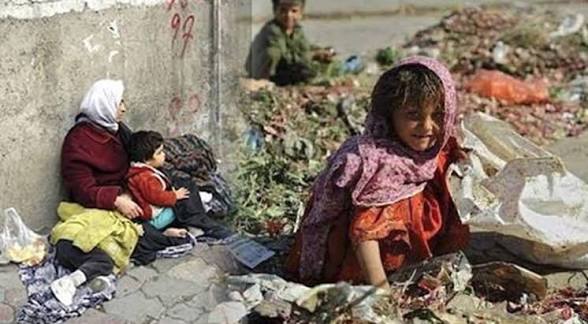
The regime’s wars… are half of iranian families living below the absolute poverty line?
The record-breaking and insane rise in food prices, which recorded unprecedented figures in the history of the Iranian economy during the past few months of 2026, is no longer merely a simple economic fluctuation or a passing inflation crisis that can be contained through traditional monetary policies.
Rather, the matter has turned into a catastrophic radical transformation devastating the details of citizens’ daily lives, forcing millions to change their way of living in order to survive.
This sharp internal collapse in living conditions comes at a time when the Iranian regime continues to adhere to its regional policies based on waging external proxy wars and lavishly spending billions of dollars on militias and agents in the Middle East with the aim of destabilizing regional and international security.
In this context, economic and development experts estimated the total cost of the Tehran regime’s involvement in regional and international conflicts at approximately three trillion dollars since the establishment and control of the Iranian state by the mullahs’ regime in 1979.
These enormous sums could have transformed Iran into one of the world’s strongest welfare economies instead of drowning its people in the swamp of deprivation.
Terrifying Data: The Food Basket Rises by 2.5 Times and Credit Reaches Dinner Meals
Official data issued by the Statistical Center of Iran in the spring of 2026 presents an extremely bleak and alarming picture of the economic scene.
The inflation rate in food and basic beverage prices exceeded the 115% threshold, while the average cost of purchasing essential goods in the daily consumer basket rose by approximately 2.5 times compared to the corresponding period of the previous year.
Under these exceptionally harsh conditions, an economic and social phenomenon unfamiliar to society has emerged. Installment and credit purchases for food items which in Iranian popular culture had previously been limited to very rare cases or large and expensive purchases such as bulk rice in massive quantities now include simple daily dinner meals, fresh meat, and even basic dairy products such as milk and cheese. This reflects a complete erosion of the purchasing power of the local currency, the Iranian rial, in the face of unavoidable vital necessities.
The Cycle of Permanent Debt: Installment Buying as a Desperate Defensive Mechanism
Social media platforms and internet networks are crowded with complaints and pleas from Iranian citizens clearly revealing the scale of the tragedy.
Unlike social welfare loans or credit cards in developed countries, which are used as smart tools for financial management and income distribution, buying food on installments in Iran represents a “desperate defensive mechanism for survival” and a temporary escape from the claws of hunger.
Economists point to a dangerous structural dilemma in this pattern of consumption.
When installment purchases include rapidly perishable consumer goods such as food, the speed of consuming these goods is far greater and much faster than the speed of repaying the monthly installments owed to the merchant.
This sharp time disparity traps Iranian families into accumulated and permanent debt from which it is almost impossible to escape, pushing families into a continuous vicious cycle.
Moreover, the absolute inability to predict prices and the daily jumps in commodity prices deprives families of the ability to plan for the long or medium term, turning family and financial stability into a fantasy.
Income Crushing: Food Consumes 65% of Workers’ Wages and Human Capital Declines
Field economic estimates indicate that the cost of a basic and rationed food basket now constitutes more than 65% of the minimum wage for an average working family of four, after this troubling percentage had been less than 50% last year.
This dramatic development signifies an imminent danger, as food alone consumes the overwhelming majority of family income, leaving no money or cash surplus to cover other living expenses such as rent or bills.
When more than two-thirds of income is spent on food and drink, families are forced to sharply reduce their non-food expenditures. The sectors of education, non-emergency healthcare, entertainment, and culture are among the first victims of this deteriorating situation.
Researchers warn that neglecting medical care, education, and training will inevitably lead in the long term to a frightening decline in the quality of the workforce and the destruction of the country’s human capital, thereby obstructing any future opportunities for economic development.
On the other hand, when the middle and poor classes devote all of their daily energy and available free time to securing basic means of living and searching for bread, the time necessary to preserve social ties, local solidarity, and voluntary civic activities is consequently lost.
This stressful economic situation fuels social isolation and individuals’ feelings of alienation, directly and systematically contributing to weakening civic activism and perpetuating the state of political repression imposed by the regime, as society becomes preoccupied with hunger instead of demanding rights and freedoms.
Furthermore, the broad media coverage of difficult living conditions and the continuous rise in prices in media outlets and social networks creates a strong collective feeling of psychological insecurity and frustration.
In this crisis-driven psychological state, society perceives its surrounding environment as more unstable, hostile, and unreliable, which reduces the level of social tolerance and peaceful coexistence among individuals.
Poverty Becomes Savage and Inflation Devours Wages: Four Main Causes of Collapse
With the intensification of structural crises, poverty has recorded unprecedented levels in Iran during recent years.
Economic reports and analyses indicate a noticeable and deep expansion in the scope of poverty in Iran due to runaway inflation and the collapse of the local currency’s value.
Inflation rates rose sharply, especially in food products, leading to a major decline in the purchasing power of salaries and making citizens’ incomes far lower than the basic costs of living, namely the poverty line, amid serious warnings that poverty may become an entrenched and ongoing phenomenon in society unless urgent and radical measures are taken.
The main causes behind the expansion and intensification of poverty in Iranian society can be summarized in four fundamental factors.
Annual and monthly inflation, particularly in the prices of basic food products, surged by rates ranging between 60 and 70 percent as officially announced sectoral figures, causing an immediate erosion of salaries and total household incomes.
Workers’ and employees’ wages also do not even cover the minimum living basket, as the actual poverty line is estimated at more than 500 million Iranian rials, while the average officially distributed salaries are far below that.
International economic sanctions on Tehran, which came as a reaction to the Iranian regime’s destabilizing role toward regional and international security, also play a chronic structural role in increasing financial suffocation, as they raise production costs and limit the state’s access to foreign resources and global markets.
Also, the unfair government budget, which included a proposed salary increase of only 20 percent against a much higher actual inflation rate, in addition to imposing a silent increase in taxes, doubled the pressure on citizens and crushed the middle class.
Sharp Decline in Purchasing Power: Fragile Improvement on Paper and Miserable Reality
Although some World Bank reports had previously indicated an apparent and temporary decline in poverty rates according to the global average poverty line in past years with the paper rate dropping from approximately 29.3 percent in 2020 to around 21.9 percent in 2022 this improvement is described as extremely fragile.
More than one-fifth of the population still officially lives below this strict line in Iran, and updated data confirms that the poverty rate ranges between 20 and 21 percent, indicating that a very broad segment lives without an adequate level of welfare or real food security.
These figures and international indicators, even if they appear reassuring in a superficial reading, do not reflect other decisive indicators such as severe economic fragility and the proximity of broad segments of citizens to the edge of the abyss.
Thousands of Iranian families that barely stand above the poverty line can slip directly below it with any simple inflationary or economic shock. Independent field reports confirm that a considerable proportion of Iran’s population currently falls below the absolute poverty line, meaning their daily incomes do not even cover the minimum biological and essential needs for food and safe water.
In light of this chronic inflation and the terrifying decline in the purchasing power of wages, independent media and economic analyses indicate that more than 80 percent of Iranian families may effectively be below global poverty line standards and decent living levels, while unofficial and realistic estimates suggest that approximately half of the population, 50 percent, is now effectively living below the actual and extreme poverty line when the real cost of living, rental prices, and services are taken into account. This places the country before a social and living dilemma threatening to explode at any moment as a result of prioritizing agendas of external expansion at the expense of the hungry population at home.