Ahwazi intellectuals behind bars… blatant violations of the right to life and a fair trial
In recent times, serious international and human rights concerns have been mounting over the unknown fate surrounding the lives of dozens of Ahwazi intellectuals, poets, writers, and cultural activists inside prisons run by the Iranian authorities in Ahwaz.
Field reports indicate that this elite segment of Ahwazi society has become a direct target of repressive campaigns that fall far short of the most basic standards of justice, amid an environment of security secrecy and deliberate judicial opacity.
Vague Charges and a Judiciary Lacking Justice
Arab intellectuals and activists in Ahwaz including poets, rap singers, and writers face a list of vague and pre-packaged accusations such as “acting against national security,” “enmity against God,” or “propaganda against the state.”
Revolutionary courts in Ahwaz, particularly Branches Three and Four, routinely issue harsh sentences.
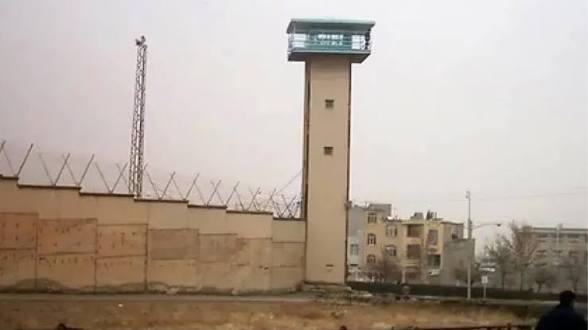
These trials lack even the most fundamental guarantees of justice; defendants’ access to independent legal counsel is restricted, and verdicts often rely on forced confessions extracted under severe torture during interrogations. Sheiban Prison and Sepidar (al-Huweirah) Prison in Ahwaz are among the most prominent detention centers known for inhumane conditions, including prolonged detention and the deliberate denial of medical care.
A Series of Violations: Stories from Inside the Prisons
The cases of poets and civil society activists Mustafa Haliji and Reza Hezbawi embody the tragedy of the Ahwazi intellectual, as they spent more than six months in pretrial detention in Sheiban Prison.
According to human rights sources, both were subjected to brutal torture, including suspension and binding by the soles of their feet, along with denial of adequate healthcare.
Haliji was recently sentenced to 13 years in prison following a trial that lacked transparency.
In a related context, Arab rapper Dana Matouri (26), from the city of Abadan, faces a real risk of execution.
Matouri was arrested during the January 1404 protests, and since then authorities have prevented him from communicating with a lawyer, while his family learned of the death sentence against him only through unofficial sources.
Arrests have also targeted rapper Abbas Daghaghleh (Rashash), who was detained due to his artistic works criticizing discrimination, poverty, and racism.
Secret Executions and Systematic Repression
October 2025 witnessed a dangerous escalation with the secret execution of six Ahwazi political prisoners in Sepidar (al-Huweirah) Prison: Ali Majdam, Moein Khanfari, Mohammad Reza Moghadam, Habib Daris, Adnan Qubayshawi, and Salem Mousavi.
These individuals had spent years in prison and were accused of links with external parties after being subjected to coercive torture.
Thirteen human rights organizations described these executions as a “blatant violation of the right to life.” Repression did not stop there but extended to activists who expressed sympathy with the families of the executed, such as Sajjad Gharbawi and Hussein Jalal.
International Cries for Help
What is taking place in Ahwaz is not a series of isolated incidents but a documented, systematic pattern.
The process typically begins with arbitrary arrest preceded by security surveillance, followed by prolonged pretrial detention in complete isolation from the outside world.
This is followed by torture to extract confessions that are later broadcast on official television, before revolutionary courts affiliated with the authorities especially Branches Three and Four in Ahwaz hold closed-door sessions and issue severe sentences, often without defendants being able to secure independent legal representation. The transfer of a prisoner to solitary confinement is frequently an early indication of an impending execution.
This deliberate opacity constitutes an integral part of a mechanism of psychological terror, intended to instill fear among Ahwazi intellectuals and activists and to force society into silence out of fear of the unknown.
Human rights organizations, including the United Nations, Amnesty International, and Human Rights Watch, summarize the key concerns as follows:
torture and forced confessions; lack of clarity regarding precise charges; denial of legal representation; closed hearings; severe overcrowding; absence of medical care; and psychological pressure exerted on prisoners’ families through the denial of visits.
Targeting Arab Identity
What further exacerbates the gravity of the situation is that those targeted belong to Ahwaz, and many address in their work legitimate issues related to cultural identity, the Arabic language, and the economic deprivation suffered by the region.
This effectively transforms cultural expression poetry, song, and literary articulation into a security threat in the eyes of the Iranian authorities, making creative expression in Arabic a life-threatening endeavor.
The international community has not remained entirely silent. The United Nations Special Rapporteur on extrajudicial executions has repeatedly warned of the seriousness of these cases.
Prominent organizations such as Amnesty International and Human Rights Watch have documented violations with names, dates, and details. PEN International has also expressed growing concern over the persecution of writers and poets.