Iraq under the grip of militias.. How Iran consolidated Its influence and turned the state into an arena for its regional conflicts?
Since the fall of Saddam Hussein’s regime in 2003 following the American invasion of Iraq, Iran has become one of the most influential actors in the Iraqi scene politically, militarily, and economically.
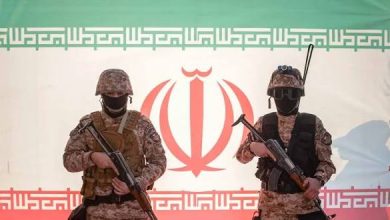
Iran exploited the vacuum that followed the collapse of Iraqi state institutions to expand its influence through a network of parties and armed groups affiliated with it, most notably the factions operating within the Popular Mobilization Forces.
Over more than two decades, Iraq transformed into a central arena in Iran’s regional strategy, prompting widespread accusations against Tehran of using armed militias to consolidate its political, military, and economic influence, even if that came at the expense of the stability, sovereignty, and interests of the Iraqi state and its people.
Iranian influence in Iraq began expanding rapidly after 2003 through support for Shiite parties and armed factions that emerged or strengthened during the period of the American occupation.
Tehran benefited from religious, political, and geographical ties with Iraq to build a deep network of influence within state institutions, security agencies, and the economy.
With the escalation of sectarian violence between 2005 and 2007, factions supported by the Iranian Revolutionary Guard were accused of carrying out operations against American forces and rival Iraqi groups, while Iran was simultaneously working to consolidate its presence within the new Iraqi political system.
However, the major turning point came in 2014 after ISIS seized vast areas of Iraq, including the city of Mosul.
At that time, the formation of the “Popular Mobilization Forces” was announced in response to the “collective jihad” fatwa issued by the Shiite cleric Ali al-Sistani to confront the organization.
Popular Mobilization factions, with direct support from Iran, succeeded in playing a major military role in retaking the cities that ISIS had controlled.
However, the expansion of these factions’ influence after the end of the battles raised domestic and international concerns that they were transforming into a force parallel to the Iraqi state.
Although the Popular Mobilization Forces became an official state-affiliated institution in 2016, a number of its most prominent factions maintain close relations with Iran, both ideologically and militarily.
These factions include groups such as Kataib Hezbollah, Asaib Ahl al-Haq, and Harakat al-Nujaba, some of which have been designated by the United States as terrorist organizations.
These factions were also directly linked to the former commander of the “Quds Force,” Qassem Soleimani, who played a pivotal role in managing Iranian influence in Iraq until he was killed in an American strike near Baghdad Airport at the beginning of 2020.
Iraqi and regional parties accuse these groups of operating according to an Iranian agenda that goes beyond Iraqi national interests, particularly in security and regional issues.
Iraqi factions loyal to Tehran participated in fighting inside Syria in support of President Bashar al-Assad’s regime, and repeatedly threatened American interests in Iraq through rocket attacks and drones targeting bases hosting American forces.
With the escalation of tensions between Iran on one side and Israel and the United States on the other, Iraq became one of the arenas of indirect confrontation, where bases and sites belonging to Iran-backed factions were subjected to repeated strikes.
Economically, Iraq faces growing domestic accusations that Iranian influence has contributed to weakening state institutions and draining their resources.
Although Iraq possesses the world’s fifth-largest proven oil reserves and relies on oil for more than 90% of its government revenues, the country continues to suffer from deteriorating infrastructure, unemployment, corruption, and weak basic services.
International reports indicate that billions of dollars have been lost due to corruption and mismanagement since 2003, while critics of Iranian influence believe that armed groups linked to Tehran benefited from this reality to strengthen their economic influence by controlling border crossings, trade networks, and influence within vital economic sectors.
Energy trade between Iraq and Iran has also sparked widespread controversy, particularly given Iraq’s dependence on Iranian gas and electricity to cover part of its domestic needs.
While the Iraqi government considers this cooperation a technical and economic necessity due to the weakness of energy infrastructure, opponents of Iranian influence believe that this dependence has enhanced Tehran’s ability to influence Iraqi decision-making and tie the Iraqi economy to its regional interests.
Politically, Iranian influence has become a major factor in shaping governmental alliances within Iraq. Tehran has played influential roles in bringing together or supporting Shiite political forces during crises surrounding the formation of successive governments, benefiting from its extensive network of relations within the Iraqi scene.
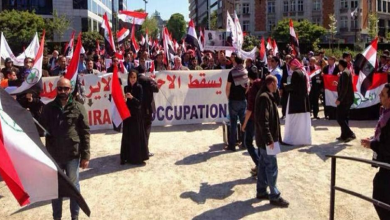
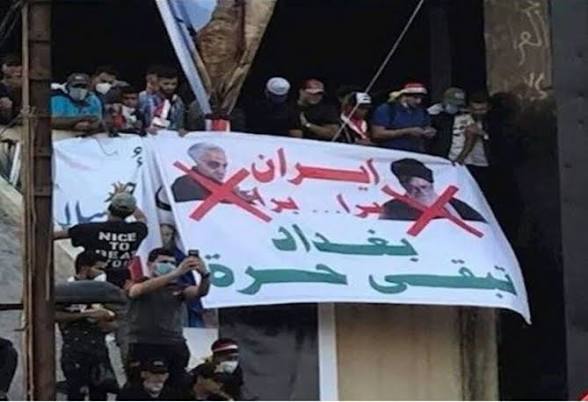
This was reflected in widespread popular protests witnessed in Iraq, particularly during the October 2019 uprising, when demonstrators raised slogans condemning Iranian interference and the dominance of armed militias over political decision-making.
Those protests resulted in the deaths of hundreds of demonstrators and the injury of thousands, according to international human rights reports, deepening internal divisions regarding the role of armed groups and the future of relations with Iran.
In contrast, factions loyal to Iran deny that they operate against Iraqi interests and affirm that their presence was decisive in defeating ISIS and preventing the collapse of the Iraqi state in 2014.
These groups also consider their relations with Tehran part of an “Axis of Resistance” confronting American and Israeli influence in the region.
Iraqi political forces close to Iran believe that cooperation with Tehran represents a geographical and security necessity due to the long border and shared interests between the two countries.
However, the greatest challenge facing Iraq remains the continued duality of power between official state institutions and armed groups possessing independent influence.
The existence of factions with broad military, economic, and political capabilities outside the government’s full control has weakened the state’s ability to impose its sovereignty and monopoly over the use of force, while also making Iraq more vulnerable to involvement in regional conflicts not directly connected to its national interests.
With the continuation of regional tensions between Iran and its rivals, the Iraqi arena appears likely to face further political and security pressures.
Iranian influence in Iraq reflects a clear model of the intertwining of regional interests with internal conflicts.
While Tehran and its allies assert that their intervention contributed to protecting Iraq from ISIS and strengthening a regional axis opposed to the United States, their critics believe that Iraq has turned into an arena of influence used by Iran to advance its strategic, political, and economic interests.
Between these two paths, Iraq remains faced with a decisive challenge represented by restoring state sovereignty and building institutions capable of making decisions free from the dominance of weapons and regional conflicts.