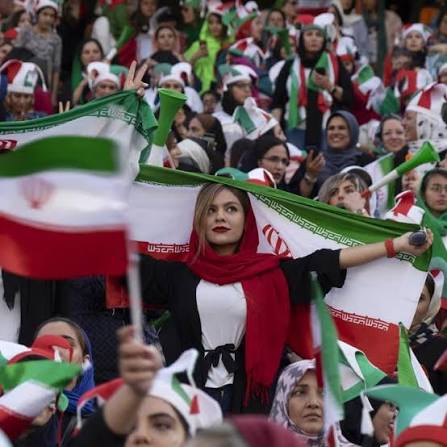
The iranian people between aspirations for peace and strategies of conflict: A widening gap amid internal pressures and international negotiations
At a time when economic and social pressures inside Iran are intensifying, the contours of a deepening gap are becoming increasingly evident between the public’s aspirations for stability and peace and the regime’s regional policies, which continue to be based on managing conflict and expanding influence.
This contradiction is no longer merely an analytical interpretation; it has become a tangible reality reflected in economic indicators, popular protests, and ongoing political interactions, including the recent Islamabad talks between the United States and Iran mediated by Pakistan.
For years, the Iranian citizen has been facing deteriorating living conditions as a result of accumulated international sanctions and economic mismanagement.
Recent estimates indicate that Iran’s inflation rate has exceeded 40% over the past year, according to data from the International Monetary Fund, while the value of the local currency has significantly eroded, with the Iranian rial losing a large portion of its purchasing power against the US dollar.
In contrast, the Iranian regime continues to invest its resources in complex regional policies, including supporting allies across multiple arenas such as Iraq, Syria, Lebanon, and Yemen.
This approach is raising increasing domestic questions about the state’s priorities, especially in light of declining basic services and rising poverty rates, which some reports suggest have affected a broad segment of the population.
External conflict policies are no longer isolated from their internal repercussions. The economic sanctions imposed on Iran, which are partly linked to its regional behavior and nuclear program, have cast heavy shadows over the national economy.
The World Bank has indicated in its reports that the Iranian economy is suffering from slowed growth and rising inflation, leading to the erosion of the middle class and increasing reliance on the informal economy.
These pressures have been reflected in recurring waves of protests witnessed across the country in recent years, where demonstrators have raised slogans criticizing external spending and calling for improvements in living conditions. Among the most prominent of these slogans are those expressing clear rejection of regional interventions, alongside calls to focus on domestic priorities.
In this context, the Islamabad talks between the United States and Iran, mediated by Pakistan, emerge as a pivotal development worthy of close attention.
These talks reflect, on one hand, an international desire to contain tensions and open channels for dialogue, particularly amid growing concerns over the expansion of conflict in the Middle East.
However, the most critical question lies in the extent of the Iranian regime’s willingness to reconsider its policies.
Previous experiences suggest that Tehran often uses negotiations as a tool for crisis management, without offering substantial concessions on core issues.
At the level of the Iranian street, expectations vary. While some view these talks as an opportunity to ease sanctions and improve economic conditions, others remain skeptical about their effectiveness, particularly in the absence of clear indicators of genuine policy change.
For decades, Iran’s strategy has been based on the principle of expanding regional influence, which is sometimes viewed as a means of strengthening national security.
However, this approach is also interpreted in some analyses as a tool for exporting internal crises by redirecting attention toward external issues.
In Iraq, Syria, Lebanon, and Yemen, Iran has played varying roles that have sparked widespread controversy at both regional and international levels.
Although these policies have granted Tehran political influence, they have come at economic and political costs that have directly impacted the domestic situation in Iran.
Reports by human rights organizations point to the continued restrictions on public freedoms, alongside security-based responses to protests. They also highlight the challenges faced by various segments of society, including workers, women, and youth.
In recent years, widespread protest movements have emerged, expressing both economic and political demands and demonstrating an advanced level of public awareness. Despite differences in their motivations, these protests share a common rejection of current conditions, including foreign policies that are perceived as coming at the expense of domestic welfare.
Iran appears today to be at a crossroads, where internal pressures intersect with external challenges. While a large segment of the population expresses a desire for stability and improved living standards, the regime continues to adopt policies centered on managing conflict and enhancing influence.
This contradiction raises fundamental questions about the future of the relationship between the state and society, especially in light of rapid international and regional developments. Will mounting economic pressures push toward a genuine reassessment of policies? Or will the regime persist in its current approach, relying on its traditional tools for crisis management?