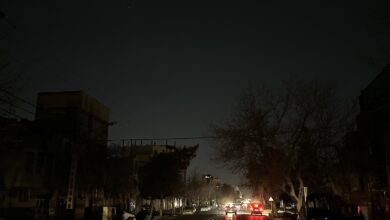
Iran.. the “Energy giant” sinks into darkness.. electricity is cut off while billions are spent on militias
In one of the most striking paradoxes of the modern era, Iran, the country that possesses the world’s third-largest oil reserves and second-largest natural gas reserves, is experiencing a crushing energy crisis that threatens the collapse of daily life.
These enormous resources, most of which are concentrated in the occupied lands of Ahwaz, leave citizens with nothing but smoke and false promises, while their revenues flow in billions into the coffers of armed militias affiliated with the Revolutionary Guard in Iraq, Syria, Yemen, and Lebanon.
The Return of Darkness.. A Deficit Beyond Expectations
After a series of official promises regarding the stability of the grid, the Iranian public was shocked by the return of electricity outages with unprecedented durations, as recurring reports indicate that hours of darkness extend from two hours to as much as 7 consecutive hours in some areas.
This crisis, which has emerged under the pretext of “managing power plant fuel,” is no longer merely a technical measure, but has become an expression of a structural failure in managing the state’s resources.
According to the official “IRNA” news agency, the capital Tehran is witnessing widespread public discontent as a result of these unannounced outages, whose effects are no longer limited to lighting alone, but have extended to paralyzing vital facilities.
The power outages have caused water pumps in residential complexes to stop functioning, while communication networks and mobile phones have been disrupted, isolating entire neighborhoods from the world, in a scene that reveals the fragility of the infrastructure and its negative interdependence, which warns of a humanitarian catastrophe.
Bitter Ministerial Admissions
Iranian Energy Minister Abbas Aliabadi found himself with no choice but to acknowledge the scale of the catastrophe, admitting that the “fuel imbalance” had reached a critical stage that forced the authorities to shut down a combined-cycle power generation plant with a capacity of 5,000 megawatts.
This forced shutdown came as a result of the inability to secure the fuel necessary to operate the plant, an admission that casts a dark shadow over the reality of a country that exports gas to the world while failing to provide “liters” to operate its national plants.
In a move reflecting a loss of control, “Tavanir,” the company responsible for managing the grid, issued strict warnings to government offices and banks, obligating them to reduce consumption by 50%, with threats of automatically cutting power through smart meters in the event of non-compliance.
These exceptional measures come simultaneously with reports from the Meteorological Organization warning of severe climate fluctuations and harsh heat waves that make the absence of air conditioning or cooling a real danger to public health.
The Cost of War and the Destruction of Infrastructure
Mehdi Masali, Secretary-General of the Iranian Electricity Industry Syndicate, revealed the ugly face of the crisis in a candid interview, confirming that cutting electricity to homes for periods ranging from 2 to 3 hours daily during the summer is “inevitable.”
Masali explained that decision-makers chose to sacrifice citizens’ comfort in favor of “large industries” and petrochemical and steel factories in order to revive the stagnant economy, meaning that the citizen is the weakest link in the regime’s priorities.
Even more dangerous was what Masali revealed regarding the impact of Iranian involvement in armed conflicts; losses to electricity infrastructure caused by “wars and confrontational policies” reached approximately 60 trillion tomans.
He added that the closure of ports to the import of raw materials necessary for maintenance, along with the Energy Ministry’s inability to collect revenues, led to near-total paralysis in the sector.
Ahwaz.. A Plundered Wealth and a Deprived People
The greatest tragedy lies in the fact that most of this energy and oil is extracted from the lands of Ahwaz, which also suffer from policies of marginalization and deliberate impoverishment.
While cities in regional capitals are illuminated thanks to Ahwazi gas, the owners of the land are drowning in darkness and cold.
Instead of investing these revenues in modernizing the dilapidated power generation stations, the Revolutionary Guard insists on pumping billions into financing Hezbollah’s missiles, the Houthis’ drones, and the salaries of “Hashd” factions in Iraq.
An Imminent Social Explosion
This glaring contradiction between a state that “sits atop a sea of energy” while living in the “darkness of the Middle Ages” is no longer acceptable to the public.
Observers believe that the Iranian regime, by placing the agenda of “exporting the revolution” above the citizen’s bread and the lighting of his home, is accelerating the pace of social explosion.
The continuation of electricity outages is not merely a “technical malfunction,” but rather a purely political decision taken by the regime to favor its militias over its people.
And with every hour of darkness that passes over Tehran, Ahwaz, or Isfahan, the gap of trust between the people and the regime widens further, warning of a wave of protests that could be the most violent yet, led by a generation that is no longer satisfied with promises, but wants the “light” that is stolen from it daily for the sake of Tehran’s external battles.
Iran today is a “state of energy living in darkness,” and with the warnings of the Secretary of the Electricity Industry Syndicate about a hot and dark summer, this threatens an explosion in the Iranian street against the regime.