
Iran 2026: A bloody security grip strangles protests and undermines public freedoms
Since late 2025 and into early 2026, Iran has witnessed one of the most violent waves of protests in its contemporary history.
Large-scale demonstrations erupted in response to deteriorating economic and social conditions, before rapidly evolving into a comprehensive political protest movement.
These protests were met with an intensive crackdown by the authorities, which has had a direct and profound impact on the state of public freedoms in the country.
Documented data from human rights organizations and international reports indicate that the scale of repression has been unprecedented.
According to multiple reports, thousands of protesters were killed during the first weeks of the unrest. United Nations estimates stated that “thousands of people, including children, were killed” as a result of the excessive use of force by security forces.
In the same context, the human rights agency HRANA documented the deaths of at least 2,403 demonstrators, in addition to dozens of non-participants among the victims, including minors.
Other estimates suggest that the death toll may exceed 30,000, although verification remains difficult due to media blackouts and internet shutdowns.
In terms of arrests, massive figures reflect the extent of the security clampdown, More than 42,000 people were detained during the protests, including hundreds of children and students, while other estimates indicate that over 10,600 demonstrators were arrested in the early stages of the events.
Reports by Amnesty International and Human Rights Watch confirm that many of these arrests were arbitrary, often accompanied by torture and ill-treatment, as well as expedited trials that failed to meet standards of justice.
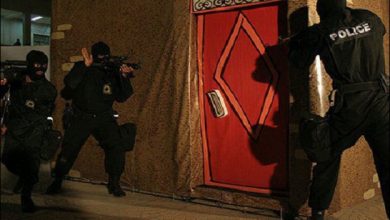
One of the most prominent manifestations of the crackdown was the widespread use of lethal force.
Human rights organizations documented instances of direct gunfire against peaceful protesters in several cities, without any imminent threat that would justify such actions.
The use of snipers and heavy weaponry was also recorded in certain areas, leading to a sharp increase in fatalities within a short period.
In specific cases, such as the events in the city of Rasht in January 2026, hundreds of people were killed within just two days, in one of the deadliest incidents.
This repression has directly impacted public freedoms, as the country has experienced a sharp decline in freedom of expression and assembly.
Authorities imposed strict restrictions on the internet, reaching the level of near-total shutdown during the peak of the protests, with the aim of limiting the flow of information and preventing the documentation of violations.
Journalists and activists were also subjected to increased pressure, with many arrested as part of a policy aimed at controlling the media narrative.
Freedom of association and civil activity has likewise been significantly affected, as authorities targeted civil society groups, including human rights defenders, trade unions, and student activists.
Reports by Human Rights Watch indicate that 2025 had already witnessed a marked deterioration in the state of freedoms, with the highest execution rates recorded in years and continued repression of women and minorities developments that further escalated with the events of 2026.
Another notable aspect is the impact of the crackdown on the most vulnerable groups, particularly children.
At least 118 children were documented as having been killed during the protests, in addition to the arrest of hundreds of minors, reflecting the broad scope of violence and the indiscriminate use of force.
On the legal and political levels, this repression has undermined the rule of law. Cases of extrajudicial executions, incommunicado detention, and enforced disappearances have been documented practices condemned by the United Nations Human Rights Council, which has called for an urgent international investigation into the violations.
The mandate of the international fact-finding mission on Iran has also been extended, underscoring the gravity and persistence of the situation.
It appears that the suppression of protests in Iran during 2026 was not merely a temporary security response, but rather had a deep structural impact on public freedoms.
It has led to widespread restrictions on freedom of expression, undermined the right to peaceful protest, weakened civil society institutions, and entrenched a climate of fear and impunity.
Indicators suggest that this approach may have long-term repercussions for political and social stability, as well as for the trajectory of human rights in the country.