The erosion of the backbone of Iran’s economy: how economic policies are driving the middle class toward fragility
The middle class in Iran has historically represented one of the most important pillars of economic and social stability, playing a central role in supporting productive and consumer activity, and contributing to maintaining balance within society.
However, recent years have witnessed a clear deterioration in the conditions of this segment, as a result of a complex mix of domestic economic policies, structural challenges, and a rise in the cost of living at a pace exceeding income growth.
This decline is no longer merely a social phenomenon; it has become an economic indicator reflecting deep imbalances within the structure of the Iranian economy.
The roots of the crisis trace back to many years of fiscal and monetary policies characterized by instability, alongside the impact of economic sanctions that have restricted flows of investment and trade.
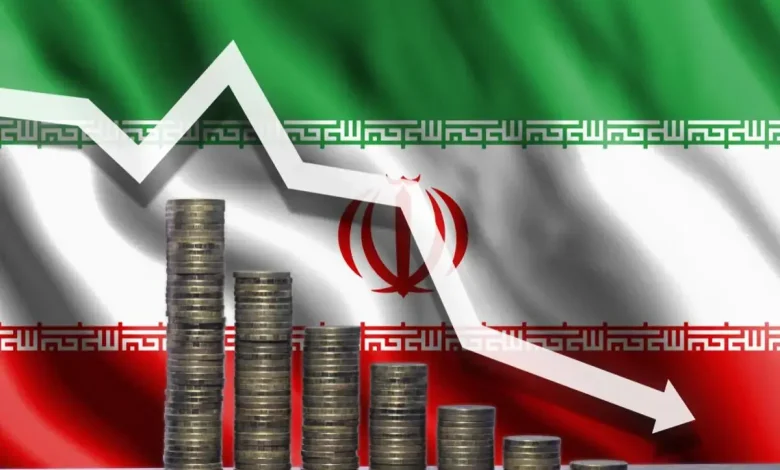
As pressures have intensified in recent years, households’ purchasing power has declined significantly, amid inflation rates rising to record levels.
The Iranian economy has experienced successive waves of inflation, exceeding 50 percent in certain periods, leading to a rapid erosion in the value of incomes, particularly among segments that rely on fixed salaries.
This situation has directly affected the middle class, which has found itself unable to keep pace with the continuous rise in the prices of essential goods, including food, housing, and services.
With wages remaining stagnant or increasing at rates far below inflation, the capacity to save has diminished, forcing many households to reorder their priorities toward meeting only basic needs, at the expense of education, healthcare, or improvements in living standards.
Tax policies have played a significant role in deepening this crisis, as the government has tended to rely more heavily on indirect taxes imposed on consumption, thereby increasing the burden on the middle class compared to higher-income groups.
In contrast, mechanisms for imposing progressive taxation on wealth and income remain limited in effectiveness, contributing to a widening income gap within society.
This imbalance in the distribution of tax burdens reinforces the erosion of the middle class and weakens its ability to withstand economic pressures.
Subsidy policies have also undergone significant transformations in recent years, with support for energy and some essential goods being reduced as part of efforts to consolidate public finances.
Although such measures may be justified from an economic perspective, their effects have been direct and severe on the middle class, which does not sufficiently benefit from targeted support programs for the poorest segments, while at the same time lacking the capacity to absorb successive price increases.
On the other hand, changes in the Iranian labor market have contributed to increasing pressure on this segment.
Economic uncertainty has led to a decline in stable employment opportunities and a rise in unemployment rates, particularly among youth and graduates.
Moreover, weak investment in productive sectors has limited the creation of quality jobs, pushing part of the middle class into unstable or low-income employment.
This shift has undermined the economic security of households and increased their vulnerability.
These challenges are reflected in the behavior of Iranian households, where reliance on borrowing to cover daily expenses has increased, alongside a marked decline in savings.
The country has also witnessed a rise in the tendency of scientific and professional talent to emigrate in search of better opportunities and greater economic stability, representing an additional loss to the domestic economy and further complicating the crisis.
The hardships faced by the middle class in Iran reflect a direct outcome of a complex interaction between economic policies and internal conditions, whereby fiscal and structural choices have placed an increasing burden on this segment.
Although some of these policies may be justified in certain contexts, ignoring their impact on the middle class threatens to undermine one of the most vital foundations of the economy, making the restoration of balance between financial stability and social equity an urgent necessity that cannot be postponed.