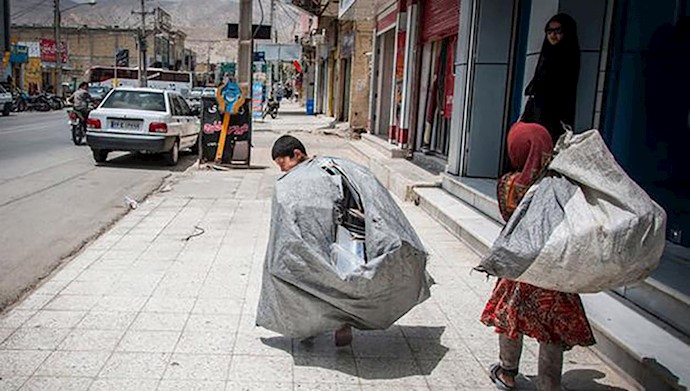
In a notable development reflecting the scale of the crisis facing the Iranian regime, statements by officials in Iran’s Ministry of Interior carried official acknowledgments of the extent of economic deterioration and the erosion of public confidence in the ruling system. Mohammad Bathaei, head of the Iranian Social Affairs Organization, revealed on Tuesday, June 16, 2026, troubling statistics based on government opinion polls showing that “60% of Iranian citizens can no longer bear additional economic pressures and have no hope of future improvement in conditions.”
A Structural Imbalance: Priorities Between Weapons and Citizens
These admissions come simultaneously with the leak of military and detailed data concerning the priorities of Iran’s budget for the period from March 2025 to March 2026, amounting to $58.7 billion.
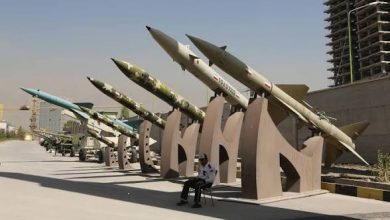
These figures revealed a glaring imbalance in the ordering of priorities, as the government allocated approximately $15.85 billion to defense, representing about 27% of the total budget.
These amounts were not limited solely to the domestic military establishment. Reports indicated that billions of dollars are allocated annually to finance armed organizations allied with Tehran across the region.
In 2025 alone, direct financial support for Hezbollah in Lebanon rose to nearly $2 billion, in addition to the transfer of hundreds of millions of dollars to Hamas and Islamic Jihad in the Palestinian territories, alongside armed militias in Iraq, at a time when Iran’s domestic population groans under the weight of poverty and deteriorating public services.
Erosion of Trust and the Collapse of “Social Capital”
Bathaei confirmed during his press conference that indicators of “social capital” in Iran have experienced a dangerous decline over the past decade, with the index falling from 43.5 in 2015 to approximately 36.6 by 2025.
The government official explained that confidence in the effectiveness of governance has sharply declined. In contrast, individuals have increased their reliance on close circles (family and friends) for financial and emotional support as an alternative to state institutions, in which they have lost confidence regarding their ability to bring about change.
On the scale of social satisfaction, the data revealed that 62% of Iranians express dissatisfaction with current social conditions.
Surveys conducted at the beginning of 2025, before the outbreak of the most recent war with the United States and Israel, also showed that 75% of citizens feel they live in an environment dominated by discrimination and inequality, while the sense of justice among the population does not exceed 25%.
An Explosive Context: Inflation, Sanctions, and Blockade
This official acknowledgment comes amid suffocating economic conditions in Iran, manifested in dramatic increases in the prices of goods and services, record inflation rates, and the collapse of the value of the local currency against gold and foreign currencies.
These crises have been exacerbated by the consequences of Israeli and American military attacks on the country and the subsequent blockade of Iranian ports, which isolated the Iranian economy from global markets.
Although the Iranian regime has consistently attempted to deny crises in their early stages, the necessity for an official such as Bathaei to publish these statistics (despite doubts surrounding their accuracy among independent experts) constitutes a strong indication that the regime recognizes the magnitude of the psychological and economic pressures pushing the public toward an explosion.
A Chronic Dilemma and Future Challenges
For decades, the Iranian citizen has suffered from the repercussions of international sanctions linked to the nuclear program, which have coincided with an administration characterized by inefficiency and corruption involving a number of senior officials and members of their families.
Despite recurring reports of corruption, the country has not witnessed any transparent or tangible judicial investigations targeting the figures associated with this corruption.
Today, Iran finds itself trapped between its expansionist ideological ambitions in the region, which drain its budget, and the demands of a population calling for its economic rights and individual freedoms.
The continuation of a policy of spending billions of dollars on cross-border militias while the population sinks into a cycle of extreme poverty has created a deep gap that does not appear bridgeable under the continuation of the current approach.