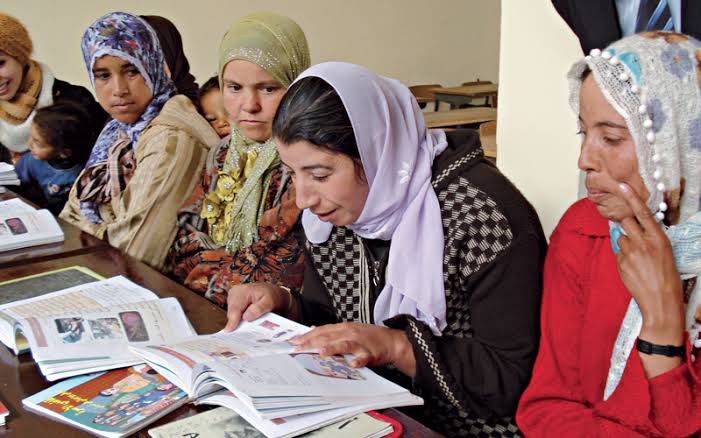
Illiteracy expands in Iran.. an educational crisis threatening the future of new generations
Despite more than four decades having passed since the establishment of the Iranian regime, illiteracy and school dropout rates continue to represent a real challenge in a number of Iranian regions, particularly poor and marginalized areas, at a time when the regime continues to allocate massive financial and military resources to support militias and armed groups allied with it in the region.
While the Iranian authorities affirm that progress has been achieved in the education sector compared to the period before 1979, social and economic indicators reveal the persistence of wide gaps in educational equity, especially between major cities and peripheral provinces, reflecting a deeper imbalance in spending priorities and development policies within the country.
Data from the United Nations Educational, Scientific and Cultural Organization (UNESCO) and the World Bank indicate that the literacy rate in Iran has exceeded 85 percent in recent years.
However, this figure conceals sharp disparities among age groups and geographic regions, where schools suffer from weak infrastructure, shortages of educational staff, and high poverty rates.
According to official Iranian reports, millions of Iranians still suffer from illiteracy or functional illiteracy, a condition in which an individual can read and write to a limited extent without possessing the basic educational skills necessary for modern life and work.
Officials from Iran’s “Literacy Movement Organization” have announced in recent years that the number of illiterate people above the age of ten is estimated at several million, despite government campaigns that have continued for decades.
Specialists believe that the real figures may be higher, particularly given the existence of school dropout rates in poor areas.
The education and illiteracy crisis in Iran cannot be separated from the overall economic situation.
High inflation and the decline in the value of the Iranian currency in recent years have increased pressure on families, prompting many children to leave school and enter the labor market at an early age to help support their families.
Estimates published by Iranian media outlets and social reports indicate rising rates of child labor in some cities and poor provinces, especially after the worsening economic crisis resulting from international sanctions and economic mismanagement.
In contrast to these domestic challenges, the Iranian regime continues to direct substantial resources toward its regional projects. For years, the United States and Western and Arab countries have accused Tehran of financing and arming armed groups in several countries, including Hezbollah in Lebanon, the Houthis in Yemen, in addition to armed factions in Iraq and Syria linked to the Islamic Revolutionary Guard Corps.
Western research reports confirm that this support has cost Iran billions of dollars over the years, at a time when the education, healthcare, and basic services sectors face increasing pressures within the country.
This contradiction has sparked growing criticism within Iran itself, as opponents and activists believe that the money spent beyond the country’s borders could have been used to improve schools, develop educational infrastructure, and provide better opportunities for children and young people.
These criticisms became particularly evident during waves of protests that swept the country, when demonstrators raised slogans calling for a focus on domestic affairs rather than external spending.
Campaigns criticizing the deterioration of public schools and the lack of educational resources compared with the scale of military and regional expenditures have also spread across social media platforms.
Local reports indicate that many Iranian schools, especially in rural areas, suffer from deteriorating buildings and shortages of heating systems and basic equipment.
In some areas, students have been forced to study in overcrowded classrooms or temporary buildings, while recent years have witnessed repeated incidents linked to poor educational infrastructure.
Teachers have also complained about low salaries, delayed payments, and weak government support for the education sector.
Despite these criticisms, the authorities argue that Western sanctions, rather than external spending, are the primary cause of the economic pressures affecting public services and education.
However, economic and social experts believe that the problem is not related solely to sanctions, but also to the way resources are distributed and spending priorities are determined.
According to economic assessments, the dominance of state-linked institutions and security agencies over large sectors of the economy has weakened the efficiency of public spending and limited opportunities for genuine reform.
The effects of illiteracy and weak education extend beyond the cultural sphere to encompass the economy and social stability. Poor education leads to lower productivity and higher rates of unemployment and poverty, while also limiting young people’s ability to integrate into the modern labor market.
International studies indicate a direct relationship between the quality of education and levels of economic development, meaning that the continuation of educational disparities in Iran may exacerbate its economic and social crises in the coming years.
Iran also faces an additional challenge in the form of the migration of scientific and academic talent abroad. Many outstanding students and graduates seek to continue their studies or work in other countries due to the lack of economic and research opportunities within the country.
Analysts believe that this phenomenon weakens Iran’s ability to develop its scientific and technological sector in the long term, despite possessing a large human base and relatively high rates of university graduates.
The illiteracy and education crisis in Iran reveals a profound paradox between the regime’s regional ambitions and its escalating domestic challenges.
While Tehran continues to expand its political and military influence beyond its borders, large segments of Iranians still face difficulties related to the most basic fundamental rights, foremost among them quality and equitable education.