Since the establishment of the religious regime in Iran in 1979, the Iranian regime has placed “exporting the revolution” at the forefront of its strategic priorities.
In 1984, the U.S. department of State designated Iran as a “state sponsor of terrorism,” and according to international reports, it later became the world’s “leading state sponsor of terrorism,” providing financial support, training, and political cover to a wide range of militias and extremist groups.
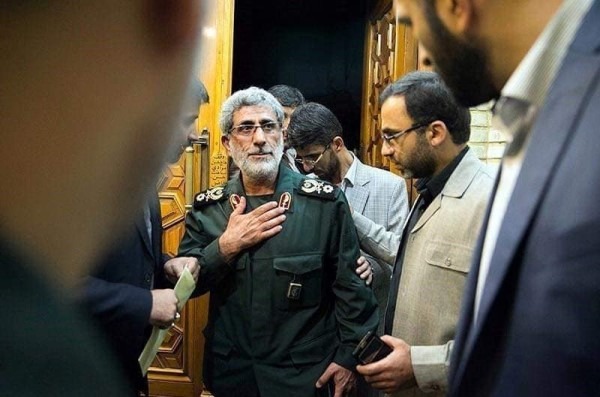
Tehran relies on a “proxy army” comprising more than a dozen militias, all operating under the direct supervision of the “Islamic Revolutionary Guard Corps.” The “Quds Force,” an elite special operations unit, serves as the mastermind and driving force behind this network, supplying proxies with weapons and training, from Bahrain and Iraq to Lebanon, the Palestinian territories, Syria, and Yemen.
Despite crippling economic sanctions, financial resources continue to flow to these proxies
U.S. estimates indicate that Iran spent more than $16 billion supporting the Assad regime and its proxies between 2012 and 2020, in addition to transferring more than $700 million annually to Hezbollah in Lebanon alone.
The October 7, 2023 massacre carried out by Hamas, and the confrontations that followed, revealed the extent of the threat this network poses to international peace and security.
From Hezbollah in Lebanon to the Houthis in Yemen and militias in Iraq and Syria, these groups conduct coordinated attacks against Israeli and American forces, pushing the region toward the brink of a large-scale regional war.
Hamas has received funding and training from the Revolutionary Guard since the 1990s.
Despite periods of political tension, Iran resumed its substantial financial support, with movement leaders acknowledging that Tehran is the primary supporter of the Al-Qassam Brigades.
Hezbollah is also considered Tehran’s strongest proxy and possesses a missile arsenal that surpasses many NATO armies in capability.
The party’s late Secretary-General acknowledged that the organization’s budget and weapons come entirely from Iran.
The Houthis have likewise evolved into a force destabilizing maritime security, launching attacks on commercial vessels in the Red Sea using Iranian-made missiles and drones, posing a direct threat to freedom of international navigation.
In Iraq, pro-Iranian militias are widespread, most notably “Kataib Hezbollah,” “Asaib Ahl al-Haq,” “Harakat al-Nujaba,” and the “Badr Organization.” These groups have been involved in thousands of attacks against U.S. and coalition forces and operate as instruments for undermining Iraqi sovereignty.
Iran’s network is not confined to the Middle East; it extends to carrying out intelligence and terrorist operations in the West. Its methods range from activating sleeper cells to contracting criminal networks.
In the 1990s, Hezbollah, with support from the Quds Force, was implicated in the bombing of the Israeli Embassy (1992) and the AMIA building (1994) in Argentina, among the deadliest attacks in Latin American history.
India and Thailand also witnessed attempts to assassinate Israeli diplomats in 2012, with investigations revealing the involvement of individuals linked to the Quds Force.
The year 2026 also saw the emergence of a mysterious group known as the “Islamic Right-Hand Movement” in Europe, which claimed responsibility for attacks on Jewish targets in the Netherlands, Belgium, and the United Kingdom, amid security investigations linking it to Iranian networks seeking to benefit from decentralized cells.
The formation of the international maritime coalition led by the United States stands out as a necessary step to protect global trade routes from interference by Houthi militias.
The network of Iranian proxies represents not only a threat to regional security but also a transnational entity that threatens local governments, undermines state sovereignty, and keeps global security in a constant state of alert.
The continued dependence of these militias on funding and direction from Tehran makes confronting them a challenge that extends beyond military operations to include cutting off funding sources and disrupting the military and logistical supply chains that are continuously sustained by the “Islamic Revolutionary Guard Corps.”