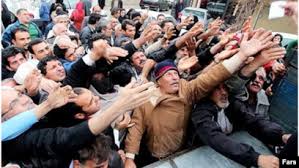
The Iranian people between the hammer of repression and the anvil of foreign policies
For decades, the Iranian people have lived in a complex state of enforced balance between mounting internal pressures and costly foreign policies, leaving them caught between a political system that imposes strict restrictions on freedoms and strategic choices that burden them without yielding tangible benefits.
This dual condition has created an intricate reality in which political, social, and cultural dimensions intersect, directly affecting the daily lives of citizens.
On the domestic front, manifestations of repression are evident in restrictions on freedom of expression and organization, as any attempts at protest or criticism are met with stringent security measures.
This climate limits society’s ability to express its demands or participate in decision-making, leading to a widening gap between the authorities and the public.
Moreover, censorship of the media and the digital sphere contributes to narrowing the space for public discourse, keeping many fundamental issues away from open and free debate.
In addition, the institutional structure suffers from excessive centralization in decision-making, which reduces the efficiency of public administration and weakens the ability of local institutions to respond to citizens’ needs.
This pattern of governance entrenches a state of political stagnation, where opportunities for gradual reform or peaceful change diminish, and citizens feel excluded from any meaningful sphere of influence.
Conversely, foreign policies play a decisive role in shaping this reality. The tendency toward engagement in regional conflicts and the expansion of influence beyond national borders has drained a significant portion of national resources and imposed additional burdens on the country.
These policies have also contributed to strained relations with the international community, resulting in the imposition of restrictions and sanctions that have indirectly affected various sectors.
This equation between internal and external dynamics has created a pressurized environment for society, where the effects of political decisions intersect with the details of everyday life.
Citizens thus find themselves impacted not only by domestic policies but also by the outcomes of strategic choices made beyond their participation.
Over time, a growing sense of uncertainty emerges due to the absence of a clear vision for the future or a defined path for reform.
All of this has placed the Iranian people in a complex position between internal pressures that restrict their freedoms and foreign policies that increase their burdens.
This situation calls for a comprehensive reassessment of priorities, directing resources inward, enhancing societal participation, and opening the way for genuine reforms that contribute to building a more sustainable balance between the state and society.
Without such measures, this tension will persist, and citizens will continue to bear the consequences of an equation in whose formulation they had no part.