The specter of hunger haunts tehran: the erosion of the middle class and the descent of millions into poverty
With the comprehensive American blockade on Iranian ports coming into effect at the beginning of 2026, Iran has entered a dark tunnel considered the most dangerous and fragile it has faced in decades. The situation is no longer merely “maximum pressure,” as it was previously termed; it has evolved into a full-fledged maritime, aerial, and economic stranglehold, placing the Iranian state at a historic crossroads.
Internal structural crises now intersect with an unprecedented external siege, pushing the relationship between the authorities and the public to the brink of eruption.
Record Inflation and an Economy in Freefall
Official and unofficial figures point to a dire living crisis. According to the Statistical Center of Iran, annual inflation reached an alarming 50.6% in February 2026, while point-to-point inflation surpassed 71.8%. Despite their severity, these figures may still fail to capture the reality on the ground in popular markets in Tehran, Isfahan, and Tabriz.
The crisis has shifted from the “financial sector” to “the loaf of bread.” Food inflation surged to over 112% in March 2026.
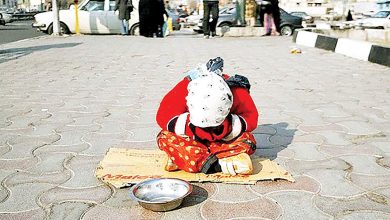
Iranians are no longer discussing prosperity but rather how to secure basic protein. Red and white meat have become “aristocratic” commodities after price increases exceeding 140%. Grains, oils, and essential vegetables have doubled in price within a matter of months, driving the middle class at unprecedented speed toward the threshold of extreme poverty.
The Collapse of the Toman: A Currency That Has Lost Its Value
In parallel markets, the Iranian toman has experienced a freefall against foreign currencies, surpassing 158,000 tomans per U.S. dollar in April 2026.
This collapse has not only increased the cost of imports but has also paralyzed the domestic production sector, as factories struggle to import raw materials or spare parts due to the scarcity of foreign currency.
Despite government attempts to absorb public anger by raising the minimum wage by 60%, this step has been described as “futile.” With estimates indicating that the actual cost of living for a family of four exceeds 75 million tomans per month, national income remains far from covering even basic needs, creating a widening living gap that cannot be bridged by stopgap measures.
Housing Crisis: Hidden Homelessness
Housing in Tehran and other major cities has turned into a daily nightmare.
According to reports published by the newspaper Donya-e-Eqtesad, the rental market has undergone a dramatic shift, with landlords now demanding upfront deposits of up to 80% of the contract value as a hedge against inflation.
This situation has led to the emergence of dangerous social phenomena, such as multiple families sharing a single apartment or relocating to informal settlements and camps on the outskirts of cities, raising the specter of a looming public health and social disaster.
Maritime Blockade and Industrial Paralysis
The U.S. military has announced the successful imposition of a complete maritime blockade, resulting in the suspension of trade through major ports.
This shutdown has not only halted oil exports but has also cut off the lifeline of manufacturing industries.
Experts warn that “two million people” in the construction, services, and maritime transport sectors are on the verge of joining the ranks of the unemployed.
Estimates from independent research centers indicate that the Iranian economy may enter a phase of “hyperinflation,” with annual inflation projected to reach 120% a level not seen in the country’s modern history. Such a collapse would undermine the foundations of the state and its ability to provide basic services.
The Cost of War and Attrition
Iran’s direct and indirect losses since the onset of recent confrontations and the blockade are estimated at approximately $270 billion.
These losses include the destruction of infrastructure, halted production, and the loss of international markets that Tehran had relied upon to circumvent sanctions.
With global economic growth slowing, according to warnings from the International Monetary Fund, Iran finds itself completely isolated in an unforgiving international environment.
Public Anger: Is the Moment of Explosion Approaching?
Behind the stark economic figures lies simmering public anger. The convergence of poverty, hunger, and unemployment with frustration over crisis management is creating a “powder keg.”
Field reports indicate that public sentiment in the Iranian street has become increasingly tense, as political slogans are no longer capable of convincing citizens who see their lifetime savings evaporating before their eyes.
Criticism is no longer confined to the opposition abroad; voices from within Iran’s elite and local press outlets such as Donya-e-Eqtesad have begun to emerge, warning that the current management of the crisis could lead to a comprehensive collapse of the social contract.
Analysts believe that the system in Tehran is now facing its most difficult test of legitimacy: either moving toward a painful political settlement to lift the blockade, or confronting an internal explosion that traditional tools of repression may no longer be sufficient to contain.