One billion dollars annually for Tehran’s proxies… iranian citizens pay the price for the regime’s regional ambitions
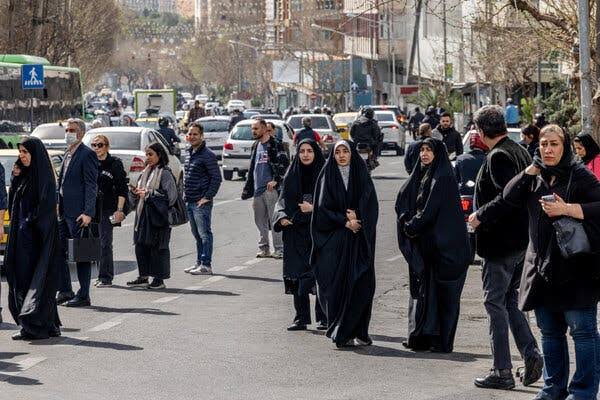
Iran’s economy is undergoing one of the most complex periods in its history during 2025 and 2026, as the repercussions of recent regional wars have intersected with years of stringent international sanctions and structural mismanagement, producing an explosive social reality.
While the regime in Tehran attempts to promote narratives of resilience, official and unofficial figures paint a picture of a country draining its resources in “external arenas” at the expense of “internal crises.”
Youth Unemployment: A Drain on Talent and Shattered Aspirations
Youth unemployment remains the most prominent ticking time bomb in Iranian society.
According to statistics from the Statistical Center of Iran and reports by the International Labour Organization for 2025, the youth unemployment rate (ages 15–24) has stabilized at chronically high levels of 21.9 percent three times the national average of 7.8 percent.
However, these figures conceal deeper disparities. Unemployment among young women (ages 20–24) has reached alarming levels ranging between 34 and 35 percent.
In remote provinces and marginalized areas, unofficial reports indicate that half of the working-age youth are unable to find jobs.
This has intensified frustration and driven brain drain to record levels, with emigration becoming the only remaining option for graduates seeking a dignified life.
The “Iran Axis” Bill: Money for Ideology
Since December 2025, and continuing into 2026, popular protests have taken on a purely economic character, but they have quickly evolved into a clear politicization of the regime’s financial priorities.
Slogans such as “Do not spend our money on Gaza and Lebanon” are no longer fleeting chants, but rather an expression of public anger over the depletion of foreign currency resources.
Economic estimates indicate that Tehran has continued to spend between hundreds of millions and more than one billion dollars annually on its regional proxies (Hezbollah, Hamas, the Houthis, and Iraqi militias).
Reports have also highlighted the transfer of approximately $1.2 billion to Hezbollah within a short period to support it in its recent confrontations an amount that Iranian citizens believe could have resolved housing crises or upgraded deteriorating infrastructure suffering from persistent electricity and internet outages.
The 2026 War: A Final Blow to Production
The direct and indirect conflicts of 2025 and 2026 have further exacerbated the situation. During what became known as the “12-Day War,” approximately 650,000 people joined the ranks of the unemployed due to the destruction of vital facilities and the disruption of ports and exports.
During the 2026 war, around two million more were added to the unemployment rolls.
In Tehran, Akbar Ghorbani, Executive Secretary of the West Tehran Workers’ Center, announced mass layoffs in major companies due to declining production capacity and factories’ inability to secure raw materials as a result of sanctions and disrupted supply chains.
Frequent power outages and weak digital infrastructure have also paralyzed the technology, media, and advertising sectors industries that had previously absorbed a large segment of educated youth.
A Bitter Reality: Inflation and the “Working Poor”
The crisis is not limited to unemployment; it has also affected those who are employed. Runaway inflation, which has exceeded 50 percent, has eroded the purchasing power of wages.
A new phenomenon has emerged in Iran’s labor market: the “working poor” individuals who work full-time yet whose salaries fail to cover minimum food and housing needs.
Experts believe that the real unemployment rate is far higher than the officially declared 7.5 percent, as statistics exclude the “inactive population” who have stopped seeking work out of despair, as well as those employed in informal and marginal jobs that provide no social security.
Difficult Choices Facing a Strained Regime
The link between foreign police embodied in the “export of the revolution” and internal collapse has become clearer than ever to the Iranian public.
Military support for proxies funded by foreign currency has brought additional sanctions, isolated the country from global investment, and drained budgets that could have created employment opportunities.
Today, the Iranian regime faces a zero-sum equation: either continue along the path of the “Axis of Resistance,” risking a broader popular uprising led by an angry youth population, or turn inward, implement structural reforms, and reduce regional escalation to salvage what remains of the economy.
Without a fundamental shift in priorities, Iran will remain trapped in a cycle of inflation, repression, and protests, as ideological rhetoric is no longer capable of filling the empty pockets of its citizens.