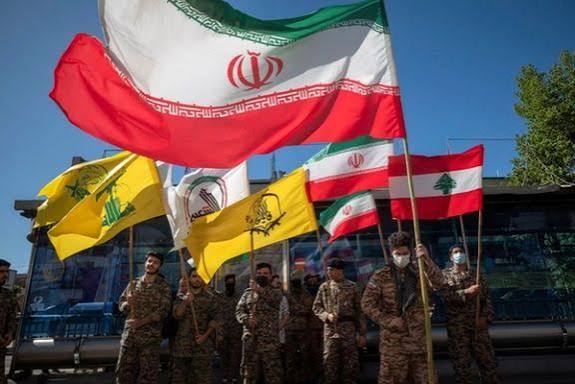
Lebanon hostage to tehran: how Iran turned Hezbollah into a tool for its wars at the expense of the Lebanese people?
Since the establishment of Hezbollah in 1982 with direct support from Iran, the party has transformed from an armed organization that emerged in the context of the Israeli invasion of Lebanon into one of the most prominent instruments of Iranian regional influence in the Middle East.
Over more than four decades, Tehran’s relationship with the party has been tied to a complex network of military, financial, and political support, making Lebanon a central arena in the regional conflict between Iran and its adversaries, and forcing the Lebanese state and society to bear a heavy political, economic, and security cost.
With the escalation of internal crises in Lebanon since 2019, the debate surrounding the role of Iran and Hezbollah has become more intense, particularly amid the unprecedented financial collapse, the decline of state institutions, and the repeated military confrontations that have directly affected civilians, infrastructure, and the economy.
For decades, Iran’s regional strategy has been linked to the concept of “exporting the revolution” and building networks of influence beyond its borders through armed groups allied with it in the region.
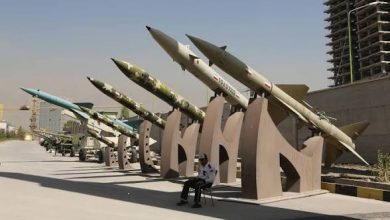
In this context, Hezbollah has represented the most prominent and most developed model among these groups, as Tehran provided it with training, weapons, and funding through the Iranian Revolutionary Guard Corps, especially the “Quds Force,” which managed Iranian external operations for decades.
Western and regional reports estimate that Iran spent hundreds of millions of dollars annually to support the party, despite differing precise estimates due to the secretive nature of these financial and military networks.
During recent years, Hezbollah’s role has no longer been confined to the Lebanese interior or confrontation with Israel, but has expanded to include direct participation in regional conflicts, particularly in Syria after the outbreak of the war in 2011.
The party played a major military role alongside the regime of President Bashar al-Assad, which Hezbollah’s opponents considered involvement in a regional Iranian project that exceeds Lebanese interests.
This intervention contributed to deepening Lebanon’s internal division and also led to Lebanon being targeted politically and security-wise by regional and international parties that viewed the Lebanese state as having become hostage to an axis led by Iran.
Economically, the repercussions became more complicated. Lebanon, which for decades had been known as a financial and service center in the region, entered since 2019 into one of the worst economic crises globally according to World Bank estimates. The Lebanese currency collapsed by more than 95% of its value, poverty rates rose to more than 80% according to United Nations estimates, while official institutions lost their ability to provide basic services.
Although the causes of the collapse are multiple and include structural corruption, poor financial management, and banking policies, activists believe that Lebanon’s association with the Iranian axis contributed to isolating it from its Arab and international surroundings and weakened its chances of obtaining investment and sustainable economic support.
These criticisms increased after the deterioration of relations between Lebanon and a number of Arab Gulf states, which historically had been among the most prominent supporters of the Lebanese economy through investments, tourism, and financial transfers.
Gulf investments declined sharply during recent years, and the numbers of Gulf tourists also decreased, at a time when the Lebanese economy relied heavily on the tourism sector and financial services.
Critics of Hezbollah link this decline to the party’s regional policies and its hostile statements toward some Arab countries, while the party and its supporters affirm that the Lebanese economic crisis is deeper than reducing it to the political or regional dimension.
From a security perspective, the repeated confrontations between Hezbollah and Israel imposed a fragile reality on Lebanon, especially in the south. Since the July 2006 war, which left many victims in Lebanon and widespread destruction of infrastructure, the danger of escalation has remained constantly present.
With the outbreak of the war in the Gaza Strip in 2023, southern Lebanon returned to the circle of daily border confrontations, causing the displacement of tens of thousands of residents and the destruction of villages and vital facilities.
Opponents of the party believe that Lebanon is being used as an advanced arena in Iran’s conflict with Israel and the United States, and that the military decision is no longer connected to Lebanese constitutional institutions as much as it is tied to broader regional calculations.
In contrast, Hezbollah rejects these accusations and asserts that its weapons constitute a fundamental deterrent element against Israel, especially amid the continuation of the border dispute and the occupation of disputed areas such as the Shebaa Farms.
The party also points to its role in confronting armed groups on the Lebanese-Syrian border during the years of the Syrian war, considering that its military intervention contributed to protecting Lebanon from direct security threats.
However, the fundamental dilemma lies in the conflict over the concept of the state and sovereignty within Lebanon. The existence of a military and political force possessing an arsenal independent from the Lebanese army created a dual reality in the structure of power, where crucial decisions related to war and peace became the subject of permanent internal controversy.
This led to deepening sectarian and political polarization and weakened the ability of successive governments to implement radical reforms or build stable national consensus.
Regionally, Iran benefits from Hezbollah’s influence as one of its most important pressure cards in confronting its adversaries, whether in negotiations with the West regarding the nuclear file or in managing regional balances.
The party possesses military and organizational capabilities considered among the strongest within non-state armed groups in the region, granting Tehran influence that extends beyond its geographical borders. However, this influence places Lebanon at the heart of regional and international conflicts that exceed its economic and political capacities, and exposes it to the repercussions of any escalation between Iran and Israel or between Iran and the United States.
In light of the continuing economic collapse and the obstruction of political solutions, Lebanon’s future prospects appear to be largely linked to the fate of regional balances. If the open confrontation between Iran and its adversaries continues, Lebanon will remain exposed to further security and economic pressures.
The current Lebanese crisis cannot be understood in isolation from the intertwining between internal factors and Iranian regional influence through Hezbollah.
While Tehran and the party view this alliance as an axis of resistance and strategic deterrence, many consider it a major reason for the erosion of Lebanese state sovereignty and its isolation from its Arab and international surroundings.