Iran under external fire pressure… how is regional tension reshaping an exhausted interior?
The Iranian domestic arena is witnessing a profound intertwining of internal crises and escalating regional tensions, to the extent that it is no longer possible to separate the economic and social situation from the context of external conflict particularly amid the confrontation with the United States and Israel, and the mounting military, political, and economic pressures it imposes.
At the core of the crisis stands the Iranian economy as one of its most prominent victims.
Renewed international sanctions and military escalation have led to a sharp decline in the value of the local currency, with the rial recording a significant collapse, directly reflected in rising prices and deteriorating living standards.
Iranian citizens are grappling with high inflation and shortages of essential goods, as the state directs an increasing share of spending toward security and defense rather than social services, Security expenditures have risen by approximately 150%, compared to only limited increases in wages.
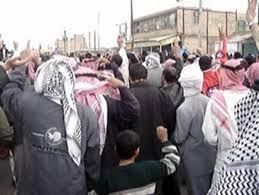
This economic deterioration has been one of the primary drivers of the widespread protests that erupted in late 2025 and continued into 2026, marking the largest unrest in decades.
Estimates indicate that between 7,000 and more than 36,000 people have been killed, in addition to up to 360,000 injured and more than 53,000 arrested.
The protests have also spread to over 200 cities, reflecting both the depth of public anger and its broad geographic scope.
These figures reflect not only an internal crisis, but also the direct impact of regional tensions that have intensified the severity of the situation.
External tension is not confined to the economy; it extends to the structure of the state’s security apparatus.
With rising fears of military threats, authorities have adopted harsher methods of control, including the use of excessive force and widespread internet shutdowns, in an effort to rapidly contain protests and prevent their spread.
This shift reflects a clear move toward a “repression economy,” in which resources are directed toward strengthening internal control rather than addressing the root causes of the crisis.
At the same time, the regional confrontation has deepened Iran’s international isolation, leading to a decline in foreign investment and reduced trade.
Recent studies link the confrontation with the West to the deterioration of economic indicators and long-term political stability.
This isolation further complicates economic recovery and, in turn, fuels public discontent.
Moreover, tensions with regional and international powers have heightened uncertainty within Iranian society, as citizens live under dual pressure: an external threat of war and a suffocating internal crisis.
This has led to the shutdown of large parts of the country during the peak of the protests, with life disrupted in 21 out of 31 provinces, reflecting the scale of the upheaval affecting the state.
War and Escalation with the United States and Israel
Against the backdrop of this crisis, the military and political confrontation with the United States and Israel emerges as a decisive factor.
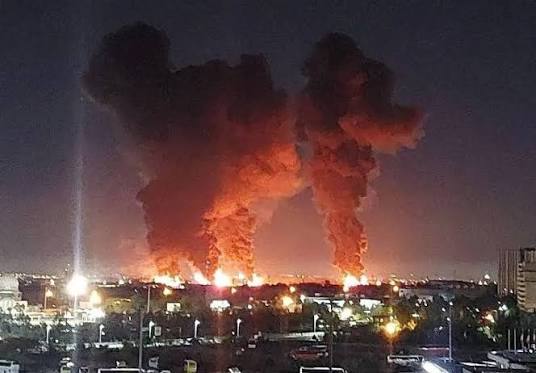
In 2025, strikes targeted Iran’s nuclear program, leading to dangerous escalation and continued tensions into 2026, amid warnings of the possibility of further strikes.
A temporary truce was reached in April 2026 through Pakistani mediation, within the context of a broader conflict that left thousands dead and affected both the regional and global economy.
This escalation has not only influenced foreign policy but has also deepened the internal crisis, pushing the government to tighten its security grip and increase military spending at a time when citizens are experiencing unprecedented deterioration in living conditions.
Negotiations in Pakistan and the Future of the Crisis
In an attempt to contain the crisis, Pakistan has emerged as a key mediator between Tehran and Washington, hosting rounds of negotiations amid an atmosphere of skepticism and tension.
Recent developments point to a state of uncertainty, as negotiations oscillate between progress and deadlock against the backdrop of ongoing field escalation.
Recent reports have confirmed that these talks are taking place at a “sensitive stage,” with the possibility of failing to achieve a genuine breakthrough, particularly given the persistence of regional tensions.
It appears that Iran’s domestic situation has become directly hostage to the regional conflict, with internal crises feeding off external tensions in a closed cycle of escalation and instability.