Billions for militias, thirst at home: Is the Iranian regime sacrificing Its people for “proxies”?
As the Iranian regime stands in 2026 on the brink of what has been described as “environmental suicide” due to the most severe water crisis in Iran’s history, figures and facts reveal a shocking paradox.
While the dams of major cities run dry and villages suffer from acute thirst, the regime continues to pour billions into financing its armed wings and regional proxies, prioritizing “security of influence” over “security of survival.”
Catastrophic Figures: Dams Below Critical Levels
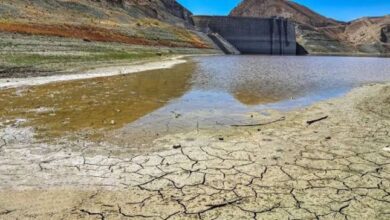
The latest statistics from Iran’s Water Resources Company point to a dire situation. As of April 2026, 14 dams located in sensitive population centers are experiencing a sharp decline in water levels, with their reservoirs not exceeding 10% of total capacity.
In the capital, Tehran, dam levels have dropped by an additional 1% compared to the end of last year, bringing discussions of the Iranian land’s “biological capacity” to the forefront of expert debate.
In a proposal reflecting deep despair, Anoush Esfandiari, a member of the “Tadbir-e Ab” research center, argues that traditional solutions have failed.
He suggests the idea of “reducing the population” to align with the natural carrying capacity of cities as the only viable long-term option an implicit acknowledgment of the state’s inability to provide the most basic lifeline to more than 85 million people.
A History of Failure: From the Shah to the “Revolution”
The water crisis is not a recent development but the result of decades of erratic development policies.
While the Shah began dismantling the traditional qanat system in favor of intensive agriculture, the post-1979 regime compounded the disaster by promoting the slogan of “self-sufficiency,” which led to excessive depletion of groundwater resources.
Official data reveal the existence of more than 320,000 unlicensed wells across the country, while the government is unable to close more than 14,000 wells annually.
Distorted financial policies further exacerbate waste: the cost of one cubic meter of water in cities is approximately 10,000 rials, yet the state sells it to consumers for only 4,000 rials.
This pricing structure removes any incentive for conservation in a country where per capita consumption is double the global average.
Lost Water Security Versus Proxy Financing
The paradox fueling public anger in Iran lies in spending priorities. While 97% of the country’s land area suffers from varying degrees of drought and 11 major cities face severe water shortages, international reports indicate that the regime allocates substantial budgets to fund its proxies.
Estimates suggest that Hezbollah receives between $700 million and $1 billion annually, while support for militias in Iraq and Yemen is valued in the hundreds of millions of dollars.
Hundreds of billions have been spent over two decades to consolidate the influence of the Quds Force, while water infrastructure across Iran remains dilapidated and outdated.
This stark contradiction has led to rising social tensions. Since the protests of the summer of 2021, water scarcity has become a new catalyst for uprising against the regime.
In Isfahan, protests over the drying of the Zayandeh Rud River escalated into violent confrontations, and in 2018 alone, 25 people were killed and thousands demanding the “right to water” were arrested.
Summer 2026: The Major Explosion?
Iran is heading toward a scorching summer, with average temperatures rising by 2 degrees Celsius four times the global average.
The regime’s continued disregard for the cries of thirst from rural and urban populations, coupled with its insistence on draining national wealth into proxy wars, places the country on the brink of a catastrophic scenario.
Rural-to-urban migration has intensified pressure on already collapsing infrastructure, turning social tension into a “ticking time bomb” that could explode with the first prolonged water outage this summer.