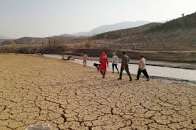
While the Iranian regime continues to drain national financial resources in costly regional conflicts and fund armed militias and its proxies across the Middle East, the Iranian people are facing a bitter reality manifested in a severe water crisis that threatens the country’s water and food security.
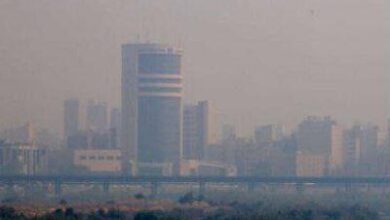
While billions are being spent on external military projects, major Iranian cities are suffering from “water stress” that has reached alarming levels, posing an imminent threat even to the provision of drinking water for millions of residents.
Warnings by Iranian experts about the water crisis are no longer merely forecasts of the future; they have become a reality spoken through shocking figures.
In this context, a senior official at the Iranian Meteorological Organization revealed that water stress in vital regions of the country has reached a stage of “extreme danger,” indicating that ignoring water conservation policies is no longer an available option but rather a certain path toward the inability to meet basic needs.
Ahad Vazifeh, head of the organization’s National Center for Climate and Crisis Management, pointed to a troubling reality in major cities such as Tehran, Karaj, Mashhad, and Isfahan.
Vazifeh stated in a tone carrying clear warnings that residents of these cities, along with other cities such as Saveh and Arak, are urged to immediately adopt austerity measures in water consumption, adding: “Otherwise, we are expected to face a severe shortage of drinking water in these cities.”
These warnings gain significance at a time when meteorological data showed that April and May of the current year, 2026, were exceptionally rainy, with precipitation rates rising by about four percent above normal conditions.
Nevertheless, Vazifeh explains that these seasonal rains were not sufficient to compensate for the accumulated deficit resulting from years of mismanagement and ongoing drought.
Iran’s water deficit is not merely the result of climatic fluctuations but a cumulative consequence of planning policies suffering from structural dysfunction.
While provinces such as Tehran, Qom, Qazvin, Semnan, Markazi, and Gilan suffer from significant shortages in rainfall, water infrastructure remains incapable of adapting to climate changes.
Tehran Province represents the worst example in this regard. Despite receiving 155 millimeters of rainfall during the current water year, this figure remains 38% below the normal average.
Statistics indicate an extremely dangerous situation in the heart of the capital, Tehran, which ended last year with a nearly 50% decline in rainfall and continues this year to set records as one of the provinces most severely affected by drought.
The crisis is not limited to the capital but extends across a broad map of the provinces of Iran’s central plateau, including Kerman, Fars, Isfahan, Yazd, Markazi, Qom, and Semnan, which are home to approximately 20% of Iran’s population.
The Iranian Water Resources Management Company announced that the filling rate of the country’s main dams reached 66 percent, representing an increase of 29 percent compared to last year and a 7 percent increase compared to the ten-year average.
These figures place Iran’s planning system in direct confrontation with the people, who see their natural resources evaporating before their eyes while state budgets are poured into wars beyond the country’s borders.
Observers raise legitimate questions about the relationship between the environmental crisis and the regime’s foreign policies. While official media promotes “strategic victories” in the region, it overlooks the fact that the real cost of this agenda is being paid by the Ahwazi farmer who has lost his crops due to drought, the citizen in Isfahan who sees his historic river dry, and the residents of major cities threatened by interruptions in drinking water supplies.
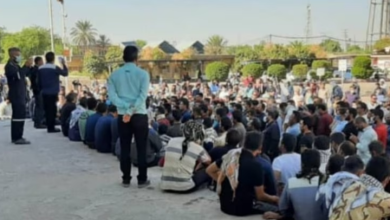
The water crisis in Iran reflects the regime’s policy of “prioritization.” Investment in developing modern irrigation networks, wastewater treatment, and scientific management of water resources requires massive investments that are no longer available due to soaring inflation, the cost of regional military confrontation, and international sanctions. This contradiction generates growing social tension, as the water crisis has become one of the main drivers of popular protests across various provinces.
The repercussions have not been limited to drinking water but have extended to the agricultural sector, which represents the backbone of the local economy.
Drought has led to a sharp decline in cultivated land areas and productivity, forcing thousands of farmers to abandon their lands and migrate to cities, contributing to the expansion of poor belts around major urban centers.
The loss of “food security” is the other side of the coin that the regime ignores in its populist rhetoric.
Environmental experts affirm that the continuation of the current situation means that vast areas of Iran will become uninhabitable in the coming decades. “Water stress” is not merely a temporary crisis but a permanent climatic transformation, accompanied by the authorities’ insistence on ignoring scientific realities in favor of political slogans.
While officials continue to blame “nature” or the “climate,” the regime ignores that managing water resources is a fundamental responsibility of the state toward its citizens.
As the regime continues allocating billions to its military proxies, the question posed daily by Iranian citizens remains: “Where is our wealth going while we die of thirst?”
The water crisis in Iran is not merely a struggle against drought; it is an existential conflict between the aspirations of a people demanding their right to life and the policies of a regime that places its geopolitical survival ahead of water and social needs.
Ultimately, the figures reported by the Iranian Meteorological Organization remain compelling evidence that Iran stands on the threshold of a critical phase.
If policies are not changed and economic priorities are not redirected toward domestic needs, thirst may become the greatest challenge facing the regime’s stability not from abroad, but through the anger of millions who have lost the most basic of rights in a homeland that was supposed to provide them with security and prosperity.