In a strategic shift that places the security of the Gulf region before unprecedented security challenges, an exclusive investigative report by Reuters revealed that Iran’s Islamic Revolutionary Guard Corps has established new secret cells inside Iraqi territory, operating outside the framework of traditional factions, with the aim of carrying out drone attacks targeting Gulf countries that host American military bases.
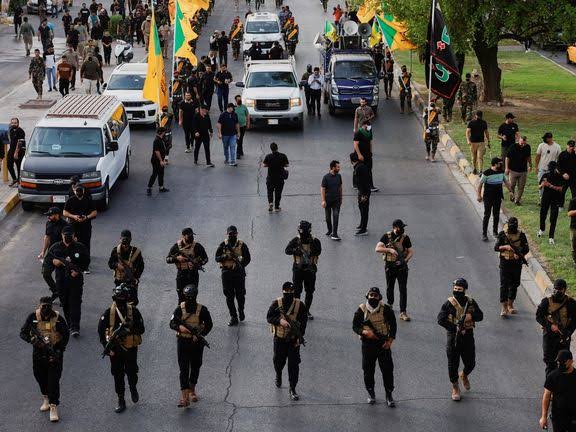
According to eight senior Iraqi sources, these groups include Shiite “elite” fighters and receive their orders and directives directly from the Quds Force of Iran’s Islamic Revolutionary Guard Corps, thereby bypassing the structure of the “Islamic Resistance in Iraq,” which includes thousands of fighters.
The sources which include military and security officials as well as field commanders indicate that Iran has formed between three and four cells, each consisting of ten carefully selected members.
These cells have successfully carried out no fewer than seven drone attacks launched from remote desert areas near the cities of Basra and Samawah in southern Iraq, targeting Kuwait, Saudi Arabia, and the United Arab Emirates during the period between April 20 and May 17.
Observers and military experts, such as retired Iraqi Major General Jassim Al-Bahadli, believe that the creation of these units reflects a fundamental change in Tehran’s tactics. At a time when traditional pro-Iran militias are suffering from the depletion of their military and financial resources, and prominent factions such as “Asaib Ahl al-Haq” and the “Imam Ali Brigades” are moving toward surrendering their weapons and engaging in political activity to avoid confrontation with the Trump administration, the Revolutionary Guard has moved to create alternatives that are more “hardline and smaller in number.”
These new groups focus on absolute loyalty and complete secrecy, allowing Iran to exert regional pressure while maintaining a margin of “political deniability,” as it is difficult to track these cells or directly link them to the known networks monitored by international intelligence agencies.
Strategic Targets and Regional Risks
According to intelligence information and field evidence collected from the launch sites, the attacks targeted sensitive objectives, including Ali Al Salem Air Base in Kuwait and a military building at Kuwait International Airport. Although air defenses in Saudi Arabia and the United Arab Emirates succeeded in intercepting the attacks directed at them, these operations triggered a severe diplomatic crisis that prompted the three Gulf states to summon Iraqi ambassadors to lodge formal protests.
These developments come at an extremely complex time, coinciding with intensive diplomatic efforts to reduce tensions. Iraqi Prime Minister Ali Al-Zaidi discussed with U.S. envoy Tom Barrack a comprehensive national plan to disarm all armed groups operating outside state authority and to ensure that Iraqi territory is not used as a platform for threatening regional peace.
Despite the Iraqi government’s commitment to investigating these violations, the challenge remains significant given the nature of these cells, which use unfamiliar names and operate across vast desert areas.
The Dilemma of Tehran and Baghdad
Despite the signing of a temporary agreement between Washington and Tehran to open a negotiating track regarding the nuclear file, Iranian officials emphasized that the issue of “supporting resistance groups” is a red line that is not subject to negotiation, placing the Baghdad government in a delicate dilemma.
On one hand, it seeks to strengthen its historical and economic relations with neighboring Gulf countries, which have witnessed notable improvement; on the other hand, it faces a security breach from cells directly linked to the Revolutionary Guard that aim to undermine efforts toward stability.
Tehran’s reliance on these “elite cells” reflects its desire to retain low-cost operational pressure tools, even in the event of a decline in the overall influence of the major militias. Nevertheless, this strategy may open the door to a new cycle of military tensions, as the international community, led by the United States, stresses the need for Baghdad to take immediate measures to dismantle these destabilizing instruments.
The coming days remain crucial in testing the Iraqi state’s ability to control its national security and whether government commitments to disarmament will be capable of confronting security cells specifically designed to operate in the shadows, far from the state’s agencies and institutions.