The earthquake of sleeper cells… how did the gulf states thwart 13 Iranian and Hezbollah plots?
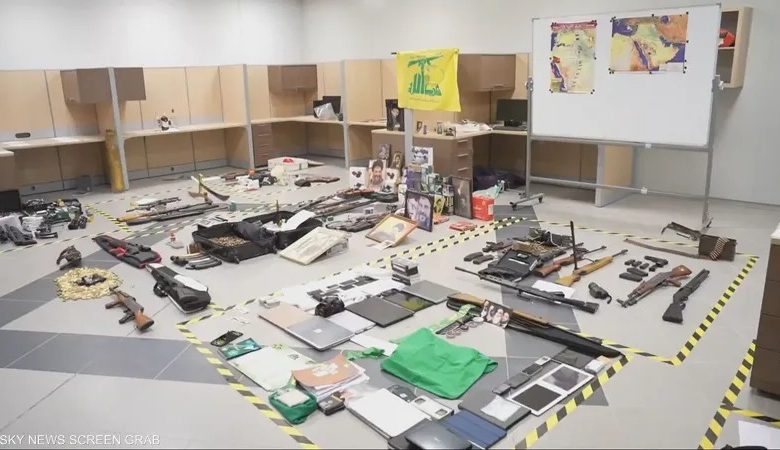
In one of the most extensive coordinated and simultaneous security operations in the region’s history, the Gulf Arab states and Syria succeeded in delivering painful strategic blows to the network of “sleeper cells” affiliated with Iran and its Lebanese arm, Hezbollah.
Investigations and official statements revealed the dismantling of 13 terrorist organizations between March 3 and today, a tally that reflects the scale of the Iranian plan aimed at destabilizing the region from within, in parallel with the direct military escalation witnessed in recent months.
United Arab Emirates: Crushing the Strongholds of the “Secret Organization” and Economic Infiltration
The United Arab Emirates led the security landscape, with the State Security Service announcing on Monday the dismantling of a “secret terrorist organization” backed by Iran the second of its kind within a single month.
Investigations revealed that this organization, linked to the ideology of Wilayat al-Faqih (Guardianship of the Jurist), had been planning systematic acts of sabotage targeting national unity and sensitive facilities.
The objectives of the cells in the UAE were not limited to military activity; a previous security operation on March 20 uncovered a network run by Hezbollah operating under a fictitious commercial cover to infiltrate the national economy and threaten financial stability.
These achievements come as the country raises the slogan “Proud of the UAE,” following its success in turning the challenges posed by 40 days of Iranian attacks into opportunities to enhance security readiness and national cohesion.
Kuwait and Syria: Foiling Assassinations and Explosives Workshops
In Kuwait, the State Security Service recorded a major success by thwarting four large-scale terrorist plots.
The operations resulted in the arrest of 24 citizens involved in financing terrorist entities under a religious cover.
Earlier operations in March also uncovered Hezbollah-affiliated cells that had been planning to assassinate prominent figures and leaders in the state, as well as target vital facilities.
On the Syrian side, the Ministry of Interior announced the dismantling of two cells linked to Hezbollah within a single week.
Authorities revealed the arrest of individuals who had received specialized training abroad in manufacturing explosives and rigging devices.
A plot to plant an explosive device in front of the home of a religious figure in the Bab Touma district of Damascus was thwarted.
Bahrain and Qatar: Espionage and Drone Operations
Bahrain, for its part, announced the dismantling of three terrorist cells linked to the Islamic Revolutionary Guard Corps and Hezbollah.
Those arrested confessed to collecting funds and passing precise information about the kingdom’s security and economic sites, exploiting charitable work as a cover for their subversive activities.
The surprise came with Qatar’s announcement of the arrest of two cells working on behalf of the Iranian Revolutionary Guard Corps.
Qatari authorities apprehended 10 suspects tasked with espionage missions and collecting coordinates of sensitive facilities. They had also received training in the use of drones to carry out sabotage operations.
The paradox lies in the presence of these cells within Qatar despite its close relations with Tehran, sending a message that Iran’s strategy of “exporting the revolution” spares neither ally nor adversary.
Analysis: Why Now? What Are the Objectives?
Security experts believe that the activation of these cells at this time is linked to Iran’s failure to achieve direct impact through its missile and drone attacks, due to the efficiency of Gulf defense systems.
These cells rely on a strategy of “latency,” waiting for favorable regional conditions.
They differ from Muslim Brotherhood cells in their direct organic link to a regional state (Iran), acting on its behalf as tools of political and military pressure.
The shared objectives of these cells can be summarized as follows: recruiting and attracting youth through secret meetings and the dissemination of misleading ideas that undermine national loyalty; economic infiltration through commercial fronts for money laundering and financing terrorist activities; technical espionage based on collecting coordinates and images of vital facilities for use in a “target bank” in the event of a comprehensive confrontation; in addition to assassinations and the targeting of political and religious figures to destabilize social peace.
The Next Challenge: Toward Comprehensive Security Coordination
These successive security strikes have revealed exceptional vigilance among Arab intelligence agencies, but at the same time have sounded the alarm over the need to move from “individual efforts” to “comprehensive intelligence coordination.”
Observers say that sleeper cells have proven to be “time bombs” that do not believe in diplomatic friendships, and that ensuring the security of the Gulf and Iraq inevitably requires uprooting these networks at their source, while strengthening national resilience against transnational ideologies that seek to replace loyalty to the state with allegiance to the “Supreme Jurist.”