The 101st anniversary of the occupation of arab Ahwaz: escalating security grip and growing prospects of popular unrest
As April 25, 2026 approaches, the 101st anniversary of the occupation of Arab Ahwaz comes amid a complex regional and domestic context, marked by mounting political and economic pressures within Iran, alongside increasing signs of tension in regions characterized by distinct national identities.
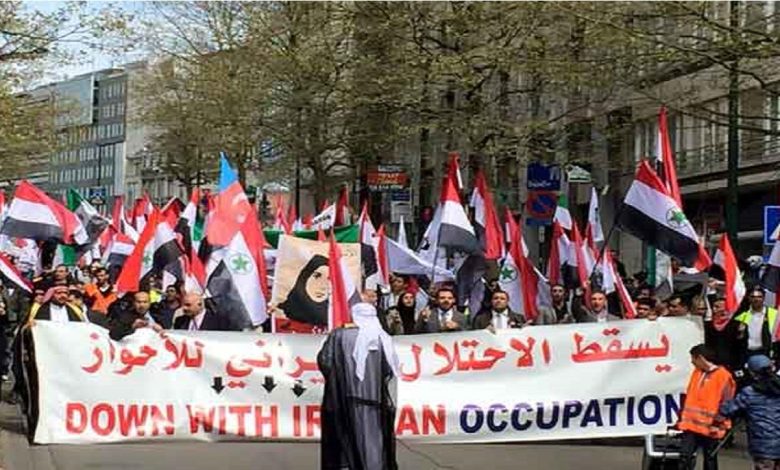
This year, the anniversary carries implications that go beyond its historical dimension, evolving into a new test of the Iranian authorities’ ability to manage tensions in Ahwaz, in contrast to the growing sense of anger among segments of the Ahwazi population, amid rising discourse about the potential for a popular uprising.
The roots of the issue date back to 1925, when Ahwaz was occupied and annexed into the geography of what is referred to as Iran, as part of a broader project to reshape the modern state.
Since then, Ahwaz despite its strategic importance and abundant natural resources, particularly oil and gas has remained in a state of chronic tension between central government policies and the aspirations of its population.
Over the decades, this relationship has taken the form of a complex dynamic characterized by political and cultural marginalization, coupled with intensified administrative and security control.
In recent years, as Iran’s internal crises have deepened, Ahwaz has re-emerged as one of the most prominent flashpoints, with authorities relying on what can be described as a “security grip” as a primary tool for maintaining order.
Numerous reports indicate an escalation in arrests and security summonses ahead of symbolically significant occasions, foremost among them the April 25 anniversary, in a clear attempt to preemptively dismantle any potential mobilization before it takes shape.
These measures fall within what is known as containment policies, aimed at absorbing public anger and preventing it from evolving into large-scale protests.
However, this security-centered approach cannot be separated from a broader context of demographic and economic policies that have sparked considerable controversy.
There are ongoing efforts by the occupying authorities to reshape the demographic composition of Ahwaz through settlement projects, alongside persistent complaints of evident economic marginalization, despite the region’s wealth.
The living conditions of many residents reflect troubling indicators, ranging from high unemployment rates and weak basic services to widespread poverty, reinforcing the perception that Ahwaz lies on Iran’s “national periphery” rather than at the center of its developmental priorities.
This accumulation of economic and social crises intersects with a broader state of tension across the geography of what is referred to as Iran, where the country has witnessed repeated waves of protests in recent years, driven by both economic and political factors.
In this context, Ahwaz appears as part of a wider internal equation, where identity-based demands intersect with calls for social justice. Accordingly, any escalation in Ahwaz cannot be understood in isolation from this broader landscape, but rather as an extension of it within a distinct local context.
The sensitivity of the current phase is further heightened by the growing role of activists and media outlets particularly through digital platforms in conveying developments inside Ahwaz to the outside world, thereby breaking the relative media isolation that had prevailed in earlier periods.
This activity has contributed to the internationalization of certain aspects of the issue, bringing it into broader discussions related to minority rights and national diversity in the region.
At the same time, the authorities view this role with concern, treating it as a catalyst for mobilization, which partly explains the tightening of surveillance and security measures.
As the anniversary approaches, questions are intensifying regarding the possible scenarios for the next phase.
Some observers believe that the security grip may once again succeed, as in previous instances, in containing any movements.
Conversely, another line of analysis suggests that the accumulation of pressures whether economic, social, or political may lead to an unexpected eruption, particularly if triggered by catalytic events such as a security incident or a sudden deterioration in living conditions.
Within this framework, the concept of “popular tension” emerges as a decisive factor, as the continued pressure without effective channels for expression could result in a rapid shift from a state of apparent calm to open protest.
The 101st anniversary of the occupation of Arab Ahwaz thus appears as a pivotal moment, reflecting complex interactions between history, politics, and economics.
In this context, the Ahwazi issue remains a significant element in the equation of regional stability, as any developments within it could extend beyond its geographical boundaries to influence broader balances.