Calm on the fronts does not halt repression: iranians confront “state terror”
Despite the fragile ceasefire between Iran and the United States holding into its second week an agreement that has spared nearly 90 million Iranians the horrors of direct bombardment the threat of death continues to haunt Iranians both at home and across the diaspora.
While the guns have fallen silent on the front lines, the noise of repression carried out by the Islamic Republic has intensified against the opposition, amid reports confirming that the regime has exploited both the wartime period and the truce to settle internal scores and silence any dissenting voice.
The Weapon of Confiscation and Transnational Pursuit
Observers have revealed that Iranian regime leaders have escalated measures to suppress protests and criticism of their policies, not only within the country but extending the reach of repression to the Iranian diaspora.
According to a statement issued by the judiciary on April 11, the regime confiscated the assets and properties of more than 400 Iranian journalists and artists abroad, alleging their support for “hostile foreign entities.”
The threats have not been limited to confiscations. Opposition figures inside the country have received direct threats from security forces, and their property has been seized as a form of collective punishment.
Judicial authorities have repeatedly declared that they will take extreme measures against anyone who “collaborates with the enemy” a vague accusation widely used to suppress protesters and human rights activists.
Pre-War Massacres and Shocking Figures
Prior to the outbreak of direct conflict with the United States and Israel in late February, the regime carried out a series of massacres to quell widespread protests triggered by a severe economic collapse and the collapse of the national currency in December 2025.
According to the Human Rights News Agency (HRANA), the toll was staggering: more than 7,000 people were killed, including at least 6,488 protesters.
The agency also reported that more than 50,000 individuals were arrested across the country, amid a complete denial of basic rights such as access to legal counsel or a fair trial.
Trump’s Promise Crushed Under the Machinery of Repression
The situation deteriorated further following a speech by U.S. President Donald Trump on February 28, in which he called on Iranians to “take control” of their government once military operations concluded, stating: “Your hour of freedom has come… when we are done, take charge.”
This speech was used by the regime as a pretext to tighten its security grip. In a televised interview on March 11, Iran’s police chief, General Ahmad Reza Radan, issued a clear warning to Iranians: “If people take to the streets to protest, we will treat them as we treated the enemy. We hold the reins.”
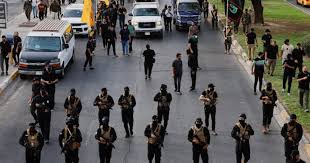
Indeed, security forces and plainclothes agents took control of major squares in Tehran, Isfahan, and Rasht, turning them into military-style zones that spread fear through loudspeakers and the broadcast of revolutionary anthems.
A New Phase of Political Executions
The implementation of execution sentences in Iran has entered a “new and deeply alarming phase” since April 2.
Human rights reports indicate that during the eight weeks of war, at least 10 political prisoners were executed in a marked acceleration of such operations.
A joint report by the Iran Human Rights Organization (IHR) and the organization “Together Against the Death Penalty” (EPCM) revealed that the regime executed at least 1,639 people in 2025 an increase of 68 percent compared to the previous year and the highest figure recorded since 1989.
Public Disillusionment: “This Is Not About Our Rights”
Amid this bloody landscape, a sense of frustration prevails among activists inside the country.
“Shadi,” an activist from the city of Rasht, wrote on her Instagram account: “If Trump cared about our lives, human rights would have been part of his 15-point proposal. But this is all about oil, proxies, and the Strait of Hormuz.”
Observers and activists believe that the war, rather than opening a path toward freedom, has eroded even the limited margin of social freedoms, reducing the people’s demands to mere “survival” amid the ruins.
Nevertheless, journalists and civil activists affirm that they will continue documenting abuses despite relentless censorship and security threats, considering the battle for documentation the last remaining weapon against Iran’s machinery of repression.