
By the Numbers: How the Iranian Regime Funds “Tools of Destruction” in the Arab Region
At a time when the pace of high-quality U.S. and Israeli military operations against strategic targets deep inside Iran is intensifying, recent field developments and intelligence reports have revealed another dimension of the conflict: the transformation of nearly 93 million people living within Iran’s geography into “hostages” of the regime’s ideological ambitions.
The Iranian regime, which chose to build the so-called “Axis of Resistance” as a tool for undermining and destabilizing Arab states, now faces a moment of truth before its own people and the world.
The Cry of the Streets: “My Life for Iran, Not Gaza or Lebanon”
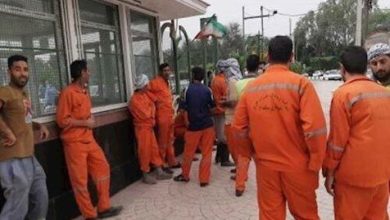
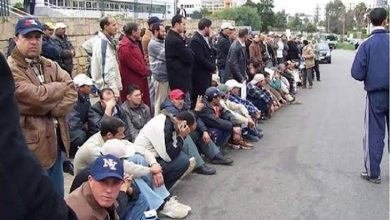
Astronomical military spending figures are no longer just statistics confined to Western research centers; they have become fuel for widespread popular protests sweeping Iranian cities. Demonstrators have chanted: “Leave Gaza, leave Lebanon, my life for Iran!” a slogan echoed by students at the University of Tehran, reflecting a cry of distress from citizens burdened by soaring inflation and a rapidly devaluing national currency.
Today, Iranians are clearly demanding: “Leave Syria, think about us!”a direct indication of their firm rejection of a policy that starves the domestic front in order to enrich armed militias abroad. As unemployment rates reach record levels, Iranians see their country’s wealth evaporating in proxy wars that serve only to keep the regime in power..
$16 Billion: The Hidden Bill for Tools of Destruction
Tehran maintains strict secrecy regarding the budgets allocated to its regional proxies, but expert estimates paint a grim picture: annual spending on terrorist groups and militias exceeds $16 billion.
Stephen Heydemann, a Syria expert at the Foundation for Defense of Democracies (FDD), estimated that Tehran alone spent between $15 and $20 billion annually to sustain the Assad regime, including multi-billion-dollar credit lines, the deployment of thousands of Revolutionary Guard members, and funding for around 20,000 cross-border fighters.
A Map of Wealth Distribution to Arms of Terror
The Iranian regime distributes wealth effectively taken from its impoverished population across a wide map of Arab conflicts. Lebanese Hezbollah receives between $700 and $800 million annually to ensure Lebanon’s political decisions remain aligned with Iran’s agenda.
Meanwhile, Iran-aligned militias in Iraq receive approximately $1 billion annually to destabilize Baghdad and keep Iraq within Iran’s sphere of influence.
In the Palestinian territories, Hamas and Islamic Jihad receive between $100 and $250 million annually, used as regional pressure tools.
In Yemen, the Houthis receive technical and military support including ballistic missiles and drones worth billions of dollars, posing a threat to international navigation in the Red Sea.
Iran’s Economy: The Heavy Price of Ideological Policy
These figures become even more alarming when compared to Iran’s struggling economy.
Every dollar sent to militias in Beirut, Sana’a, or Baghdad is a dollar taken directly from Iran’s collapsing healthcare sector, deteriorating education system, and neglected infrastructure projects in marginalized provinces.
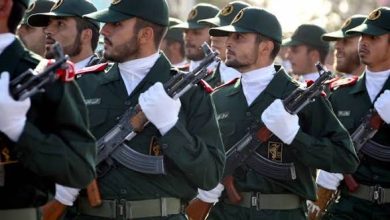
Although the official budget of the Islamic Revolutionary Guard Corps stands at $8.2 billion, this represents only the tip of the iceberg.
The IRGC receives billions more through “sovereign” funds controlled directly by the Supreme Leader, beyond any parliamentary oversight or financial transparency.
These funds are managed through parallel commercial empires that ensure a continuous flow of money to militias even if the Iranian people themselves go hungry.
The regime’s insistence on using Iran’s wealth to export destruction rather than build prosperity has turned the domestic front into a “ticking time bomb.” Citizens within Iran, who see their future burned in the fires of regional conflicts, are no longer willing to remain silent.
As international military pressure increases and key regime infrastructure is destroyed, the Iranian people are beginning to realize that their true enemy is not abroad, but within the leadership that has turned their country into a launchpad for global terrorism and a graveyard for their dreams.