36,000 killed in two years. A harrowing report on the use of lethal force to suppress protests
Amid a wave of widespread popular protests that has swept across Iran since the end of 2025, the Iranian regime has once again revealed its true repressive face, deploying a full arsenal of violence and intimidation to silence voices demanding freedom.
This confrontation between the Iranian people and the regime is neither the first nor will it be the last, unless a fundamental shift occurs in the internal balance of power and international pressure.
This report aims to shed light on the systematic patterns of repression documented by international human rights organizations, including Human Rights Watch, Amnesty International, the Human Rights Activists News Agency (HRANA), and the Iran Human Rights Organization, alongside United Nations experts.
The report provides a comprehensive picture of the tools the regime relies on to maintain its authority, the repercussions for Iranian society, and the required international response.
Outbreak of Protests and Their Context
On December 28, 2025, a spark ignited widespread popular protests across Iran. Initially, these appeared to be legitimate economic protests expressing acute living hardships resulting from mismanagement, rampant corruption, and international sanctions.
However, this spark quickly turned into a widespread blaze as protesters raised the ceiling of their demands to encompass the entire political system, calling for its overthrow and the establishment of a system based on freedom, equality, and the rule of law.
The spirit of revolution manifested in Iranian streets, where hundreds of thousands of men, women, and youth took to the streets, defying the machinery of repression and raising slogans calling for dignity and fundamental human rights.
This movement represented a natural extension of the 2022 “Woman, Life, Freedom” uprising, which erupted following the death of Mahsa Amini and confirmed that popular demands for change had not subsided but had instead intensified.
These protests cannot be understood in isolation from their deep social and political context. The grievances accumulated by the Iranian people are multidimensional and deeply rooted.
Iranian society suffers from ongoing economic collapse, a system of enforced gender segregation, and ethnic and religious discrimination against Ahwazi Arabs, Kurds, and Baluch, in addition to the rejection of the principle of compulsory religious guardianship that restricts fundamental freedoms.
Collectively, these factors explain the continued escalation of protests despite pervasive violence.
Instruments of Systematic Repression
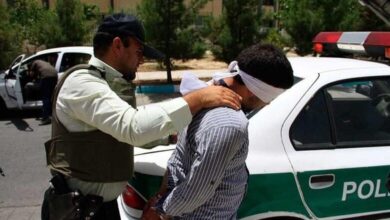
Iranian security forces immediately and systematically resorted to mass arrests as a primary tool to suppress protests and intimidate society.
Human rights organizations have documented the detention of more than 53,000 individuals, a figure that reveals an organized and systematic campaign of repression rather than spontaneous reactions.
Particularly distressing in this tragic scene is the presence of hundreds of children among the detainees, some under the age of fourteen.
This constitutes a blatant violation of all international standards for child protection. Many of these minors are held in complete isolation from their families and lawyers, amounting in itself to a form of enforced disappearance prohibited under international law.
Documented reports also indicate horrifying casualty figures, with victims shot dead by security forces amid protesting crowds. Estimates of the death toll range between 7,000 and 36,000, the majority of whom are unarmed demonstrators and bystanders. These figures place these events within the category of serious crimes against humanity.
Members of the Islamic Revolutionary Guard Corps, the Basij militia, and police forces carried out these killings using rifles, shotguns, and various firearms, often targeting the head and torso clear evidence of an intent to kill rather than disperse.
The massacres committed on January 8 and 9, 2026, highlight the peak of this systematic bloodshed, when hundreds were killed in what appears to have been a premeditated massacre reflecting the regime’s intent to terrorize the population through bloodshed.
To complete this crime, a near-total internet blackout was imposed to conceal evidence and isolate Iran from the eyes of the world.
The Iranian judiciary has also become a direct instrument in the hands of the regime to eliminate opposition. Summary trials are conducted rapidly, ending in death sentences based on vague charges such as “enmity against God” or “corruption on earth.” Death sentences have been carried out against dozens of defendants in connection with their participation in the protests, while a number of minors face the risk of execution in a clear violation of international law.
This comes amid a steady escalation in execution rates: approximately 972 executions were recorded in 2024, while 2025 exceeded between 1,000 and 1,500 cases the highest level in decades.
This repression targets Ahwazi Arabs, Baluch, Kurds, and Azerbaijanis, in addition to political activists and dissidents.
Torture and Violations in Detention Centers
International human rights organizations have documented grave violations inside Iranian detention centers, including severe physical torture, sexual violence against detainees both men and women and the use of mock executions intended to break prisoners’ will and extract confessions.
These coerced confessions are often broadcast on state television in propaganda displays that reveal the extent of official moral degradation.
International investigators have also documented deaths in custody under suspicious circumstances, alongside campaigns of harassment against the families of detainees who seek to learn the fate of their loved ones, demand their release, or pursue justice.
This deliberate practice of terrorizing families aims to silence any calls for accountability.
Official Discourse and Mechanisms of Disinformation
The Iranian regime consistently labels protesters as “rioters,” “foreign agents,” or threats to “national security,” in an attempt to distort the image of the popular movement and legitimize brutal repression as a defensive and lawful response.
The media blackout on the internet complements this strategy by isolating protesters from one another, severing communication with the outside world, and obscuring evidence of the crimes committed.
In reality, what the regime fears is not chaos but accountability. Core popular demands for freedom, dignity, and justice remain and continue to grow, while the regime relies on repression as a winning card to maintain power instead of engaging in genuine reform that addresses the root causes of the crisis.
International Response and What Is Required
In the face of Iranian repression, independent international observers foremost among them United Nations experts and major human rights organizations are documenting these violations and describing them as serious human rights abuses that may amount to crimes against humanity.
International attention, meticulous documentation, and pressure for accountability are critically important, whether through mechanisms of the UN Human Rights Council or by imposing targeted sanctions on those responsible for the violations.
However, the fundamental change sought cannot be imposed from the outside; it ultimately depends on Iran’s internal dynamics and the will of the Iranian people, who have shown readiness to pay a high price for freedom.
What the international community can do is support this people by protecting activists in exile, breaking the media blockade, and ensuring that perpetrators of crimes do not escape justice.