
Severe water crisis in Abushahr threatens date palm cultivation
Amid Iran’s ongoing policies of diverting water from Ahwaz to the Iranian interior, environmental activists in the city of Abushahr, in central Ahwaz, have warned of the worsening water crisis and its devastating impact on local agriculture particularly date palm cultivation, which is the cornerstone of the region’s economy.
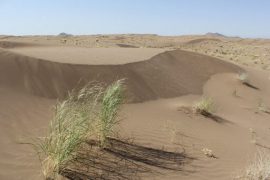
The activists confirmed that the sharp decline in groundwater levels estimated at about one meter per year has led to an annual water deficit exceeding 30 million cubic meters in agricultural plains. This deterioration has caused most of the city’s springs to dry up, a sharp decrease in river flow, and wells to become low-yield or unusable due to salinity.
According to a report issued by Abushahr’s water company, 12 out of 16 irrigated plains are now in a critical state and classified as agriculturally prohibited areas, meaning farming there has come to a complete halt. These catastrophic conditions have reduced both the quantity and quality of date production, pushing many farmers to abandon their lands and migrate to cities in search of economic alternatives.
In this context, activists noted that groundwater resources in many plains have entered a stage of “water prohibition” due to seawater intrusion and the continuous decline in water levels, warning that any further depletion would put the future of agriculture in Abushahr at total risk.
They also pointed out that the “Kabkab” variety the dominant type of date in Abushahr does not generate significant economic returns due to its low market value. They called for replacing it with higher-quality, more productive varieties capable of competing in foreign markets and boosting local income.
Activists further highlighted that rainfall has decreased by 54% in recent years, a dangerous indicator of climate deterioration in the region. They stressed the urgent need for immediate measures to confront this crisis, including changes in agricultural patterns, the development of modern irrigation systems, and stricter monitoring of water usage.
This warning emphasizes that the water crisis in Ahwaz is not only environmental but also political, in light of Iran’s discriminatory water policies, which aim to dry up the lifelines of Ahwaz as part of a systematic effort to impoverish the Ahwazi people and forcibly displace them from their lands.