Ahwaz at the british house of lords: international call for self-determination and an end to iranian violations
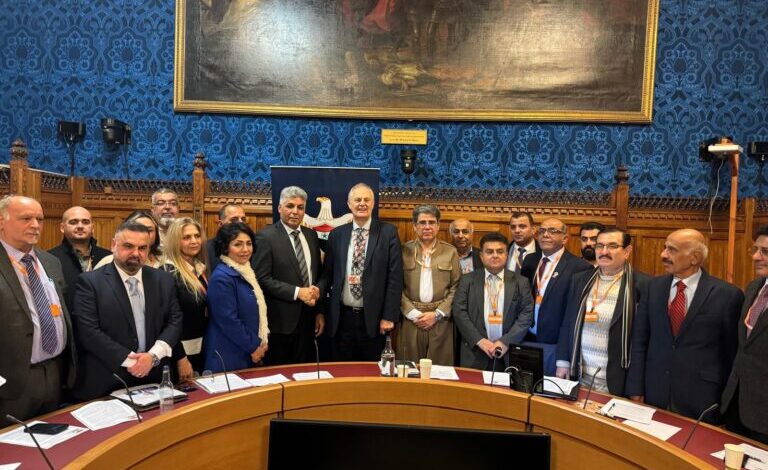
Today, the British House of Lords witnessed a rare political and human rights seminar, organized by a delegation from the Executive of the Arab State of Ahwaz, attended by prominent figures from the British Parliament and representatives of Arab and international human rights organizations, including Lord Jackson and MP Alister.
The meeting aimed to discuss British Ahwaz relations prior to 1925 and to review what participants described as a “strategic mistake” that led to the region of Ahwaz falling under Iranian control, in addition to exploring the current status of the Ahwazi issue.
Calls to Reassess Britain’s Role and Uphold the Right to Self-Determination
The Ahwazi delegation was headed by Dr. Aref Al-Kaabi, President of the Executive of the State of Ahwaz, who delivered a comprehensive presentation on the country’s conditions over the past century, highlighting what he described as “repressive practices, executions, systematic marginalization, and forced arrests” faced by the Ahwazi people since the annexation of Ahwaz.
In his speech, Al-Kaabi said: “The Ahwazi people have paid a heavy price for marginalization and neglect over more than a century, and we are here to affirm that our legitimate rights cannot be ignored.”
He added: “We hope that Britain will play an active role in reassessing its historical positions regarding Ahwaz, and in enabling our people to exercise their right to self-determination within the framework of international law.”
Al-Kaabi also emphasized the importance of maintaining continuous communication channels between both sides, stating: “The message we delivered today is not merely a diplomatic statement but an invitation to ongoing dialogue about the future of our people, away from historical silence and ongoing violations.”
Lord Jackson, for his part, confirmed that the events of 1925 represented a “strategic mistake against the Ahwazi people,” noting that Ahwaz “possessed the elements of statehood before the founding of the United Nations.”
Jackson further stated that the Ahwazi people “have the right to demand self-determination,” announcing his commitment to take steps within British institutions, including forming a team to follow up on the Ahwazi issue, pressuring the British government to open official communication channels with the Ahwazi Executive, supporting the path of self-determination, and calling for an end to “Iranian violations” against the people of Ahwaz.
Official Message to the British Government
At the conclusion of the seminar, the President of the Executive of the State of Ahwaz handed an official message to Lord Jackson, addressed to both the legislative and executive branches in the United Kingdom.
The message called on Britain to open a “political window” for discussions on the future of Ahwaz, reconsider London’s historical role and political responsibility regarding the events of 1925, and establish continuous communication channels to monitor regional developments and the progress of the Ahwazi cause internationally.
The seminar comes amid increasing Ahwazi initiatives in Western capitals, aimed at drawing attention to the Ahwazi issue and expanding international recognition, against the backdrop of growing regional and international political engagement concerning the future of the region.