
The Disintegration of the Iranian Empire: A Gateway to the Modern World
By Rahim Hamid, Ahwazi Journalist Source: Dialogue Institute for Research and Studies
The Iranian entity has long puzzled observers and scholars not because of its strength or internal cohesion, but due to its continued existence despite fragile foundations and deep contradictions. It is rare to find a political entity riddled with ethnic, religious, social, economic, and cultural contradictions on such a scale that has neither collapsed nor been restructured.
The secret behind this persistence lies not in a unifying national project, but rather in an imperial legacy of despotism, governed by fear and repression more than by values of participation or coexistence.
Modern Iran is home to multiple nations: Arabs, Kurds, Azerbaijani Turks, Baloch, Turkmen, and Persians. Each of these ethnic groups has its own language, identity, and historical narrative none of which has been respected within the framework of the modern Iranian state. The Iranian identity promoted since 1925 under Reza Shah was not a unifying project, but rather a tool to impose Persian cultural dominance over other peoples through forced assimilation and national denial policies.
Furthermore, this empire, ugly in appearance, is religiously and sectarianly incompatible. A Shiite majority holds power, while Sunnis suffer systemic and structural marginalization. Other religious minorities Baháʼís, Christians, Zoroastrians, and non-religious individuals are denied basic rights. These groups are so fundamentally different that they defy integration under any concept whether citizenship, pluralism, or democracy due to the irreconcilable nature of their differences. In sociology, such conditions are referred to as divergent fractures.
On the social level, a civilizational gap exists between cities like Tehran or Shiraz and pastoral or tribal societies in regions such as Balochistan, Ahwaz, or Kurdistan. This disconnect is not merely a cultural mosaic, as Iranian regime apologists suggest, but a civilizational mismatch some segments live in the 21st century while others remain stuck in the Middle Ages.
This is not just a developmental disparity, but a manifestation of the deep structural dysfunction at the heart of this lingering empire.
An Imperial State with a Republican Facade
Since 1979, Iran has presented itself as an Islamic Republic. Yet, its domestic conduct and even its political form resembles an empire seeking hegemony rather than a nation-state representing its citizens. It is a centralized, sectarian state that enforces assimilation rather than integration, and subjugates its peripheries instead of representing them. In this sense, Iran is one of the last remaining imperial models in the Middle East, following the collapse of both the Ottoman Empire in the early 20th century and the Soviet Empire at its end.
While the Ottomans and Soviets broke apart into new states reflecting the national identities of their peoples, Iran remains “the empire that has yet to divide.”
History teaches us that states composed of multiple peoples ruled under a single authority without a real social contract especially when built on fundamental contradictions always collapse. The Ottoman Empire, despite reform attempts such as the Tanzimat and administrative sectarianism, fell as nationalist movements surged in the 20th century, giving rise to new states aligned with original identities. The same happened with the Soviet Union, which had gathered dozens of ethnicities, languages, and cultures under one-party rule, only to crumble suddenly, leaving behind republics that returned to their roots.
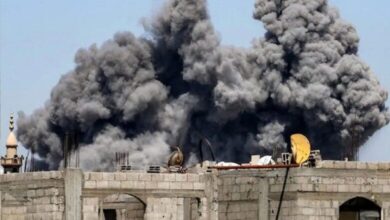
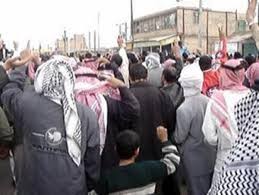
From this perspective, Iran is not an exception, but rather a delay. Its disintegration has been postponed by bloody repression and by exploiting regional wars (Iraq, Syria, Lebanon, Yemen) to keep its domestic population distracted and controlled. Yet, all the signs of imperial collapse are on the horizon: identity crisis, ethnic tension, economic decline, political paralysis, ongoing popular uprisings, and, most recently, Israeli strikes.
What is often portrayed in Western media as the “danger of Iran’s disintegration” should be flipped on its head: this is not a disintegration of a natural state but the liberation of subjugated peoples from illegitimate dominance. The Ahwazis seeking freedom from Tehran’s control are no different from Ukrainians gaining independence from Moscow. The Baloch demanding self-determination are following the same path as the Czechs and Slovaks in the 1990s. These are not “secessionist” agendas, but a return to historical legitimacy and natural rights.
Who says that preserving the cage is more important than freeing the bird? Who granted Tehran eternal dominance over peoples who are not its own? The peoples of Iran are no less aware or deserving of dignity, sovereignty, and identity than any others.
The disintegration of Iran like the collapse of other empires would not mark the end of the world, but the beginning of reshaping it. It would pave the way for a new Middle East one that is more balanced and less aggressive, free from the control of a hegemonic state that exploits religion and nationalism for domination. It would offer oppressed peoples Ahwazis in the south and southwest, Kurds in the northwest, and Baloch in the southeast the chance to build futures based on their own will, not the dictates of a “Supreme Leader.”
Moreover, the liberation of these peoples would strip Tehran of its imperial tools in the Arab world and weaken its networks that have fueled wars and militias across the region. This is a historic moment where the interests of the oppressed inside and the threatened outside converge to end the Iranian project built on coerced unity.
Iran, in its current form, is not just a failed state it is a state whose very reason for existence has expired. What is now needed is not a strategy to save it, but a plan to dismantle it with minimal human cost and maximum civilizational benefit. No future exists for a state that unites its people under the motto: “Stay silent or else…” History is unforgiving toward belated empires. Iran’s delay in collapsing only means that the moment of truth is near.