restoration of historical sites in Al-Ahwaz amid fears of Erasing Arab Identity
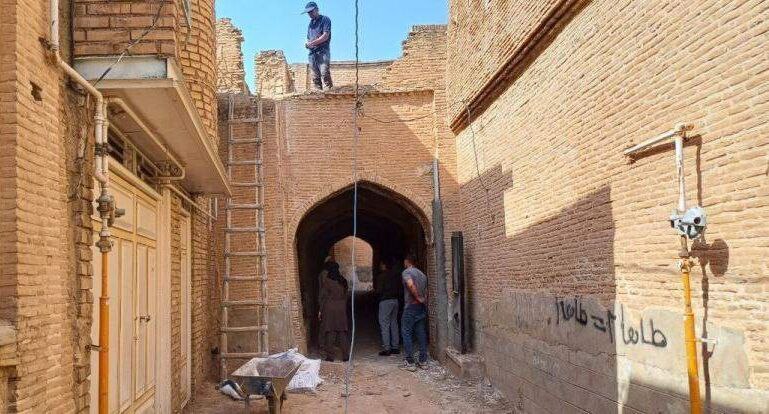
Iranian authorities, through the Department of Cultural Heritage, Tourism, and Handicrafts in the city of Al-Amidiyah, north of Al-Ahwaz, have begun implementing a project to restore historical sites and landmarks, raising concerns that these steps may be part of an effort to alter the features of the region’s authentic Arab heritage.
The head of the department, Hamid Reza Khadem, stated that the project includes restoring the historic landscape of the endowments of the well-known “Darwazeh Mosque” and reviving its historical axis.
The works involve removing additions made to the facades, reinstating the architectural style determined by the authorities, and restoring historical columns and domes.
Khadem pointed out that the work is funded by the budget of the Cultural Heritage Department in Al-Ahwaz, emphasizing that the historical axis extending from the mosque had suffered erosion and neglect for many years.
Although these sites are considered part of the historical fabric of Al-Ahwaz, whose civilizational roots stretch back about nine thousand years, Ahwazi activists warn that Iranian restoration projects are often used to reshape the visual and cultural identity of the sites in line with the Persian narrative, at the expense of authentic Arab heritage.
Al-Amidiyah, historically known as one of the most important cities in Al-Ahwaz, contains around one hundred historical sites, including mosques, houses, bathhouses, and shrines, as well as 28 interwoven traditional neighborhoods.
The city is renowned for its brick architecture, ancient water system, and status as one of the oldest centers of human settlement in the world.
Observers believe that any heritage restoration project in Al-Ahwaz cannot be separated from Iranian policies aimed at altering the Arab character of the cities and imposing an alternative cultural identity through archaeological, educational, and media projects.