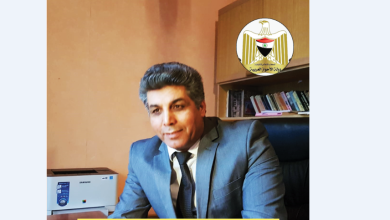
Salim Mohammed Saeed is a businessman with dual Iraqi and British citizenship. He was born in the province of Sulaymaniyah in northern Iraq and later migrated with his family to the United Kingdom, where he acquired British nationality.
Saeed is known for his longstanding ties to the Patriotic Union of Kurdistan (PUK), a connection that has remained strong and active, particularly in financial affairs. He managed several financial assets belonging to the family of the late Kurdish leader Jalal Talabani and continued in this role during the leadership of Bafel Talabani. His relationship with Bafel grew even stronger, evolving into a complex political and commercial alliance.
Over recent years, Salim Mohammed Saeed established a wide-ranging network of companies in Iraq, the United Arab Emirates, and the United Kingdom. One of the most prominent entities in this network is VS Tankers FZE, registered in the UAE, which emerged as a central player in the transportation of crude oil. The network also includes other undeclared companies that served as fronts to facilitate smuggling and concealment by registering ships under various company names or anonymous ownership, making it difficult to trace shipping routes and identify the involved parties.
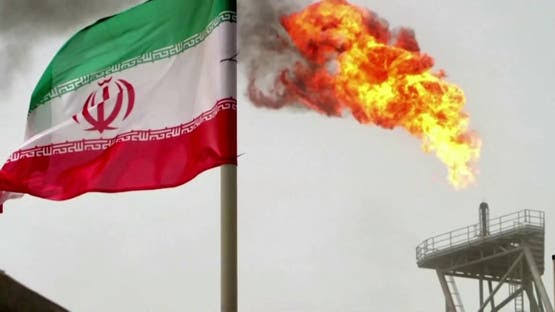
Through this network, Saeed orchestrated systematic oil smuggling operations, which involved purchasing Iranian oil or receiving it at sea, blending it with Iraqi crude to obscure its origin, and then selling it as Iraqi oil.
These operations relied on sophisticated methods such as ship-to-ship transfers in international and Gulf waters, as well as the issuance of falsified shipping documents to hide the oil’s Iranian origin. Additionally, official or counterfeit Iraqi permits were used, obtained by bribing Iraqi government officials and members of parliament, allowing the operations to continue beyond the reach of legal oversight.
Financially, estimates from the U.S. Department of the Treasury and international media reports indicate that this network has funneled hundreds of millions of dollars since 2020 into the coffers of the Islamic Revolutionary Guard Corps (IRGC), particularly its Quds Force. This flow of funds helped Iran obtain hard currency and bypass international sanctions.
According to the same sources, regular commissions were allocated to Bafel Talabani in exchange for facilitating and managing these operations. This financial support strengthened his political influence in the Kurdistan Region, backed directly by Tehran. Although exact figures for individual commissions are unavailable, American and Arab reports estimate the annual revenues from these smuggling activities to exceed $500 million, with a substantial portion of the funds going to the IRGC.
These activities have caused significant economic harm to Iraq, resulting in the loss of considerable oil revenues due to large-scale smuggling outside official channels.
Additionally, the blending of Iranian and Iraqi oil has damaged the international reputation of Iraqi crude, reducing trust among international buyers and increasing caution in dealings with Iraqi exports. This has weakened the competitiveness of Iraqi oil prices and exacerbated corruption within Iraqi institutions, where bribery has become a means of sustaining these illegal operations.
The political and financial structure of this network is built around four main actors, each fulfilling a specific role. Salim Mohammed Saeed acts as the operational mastermind, managing the companies, overseeing maritime logistics, and reaping personal profits from the smuggling.
Bafel Talabani provides political cover, using his position within the PUK to secure direct Iranian support and internal protection for the network’s operations. Meanwhile, the IRGC receives the largest financial share, redirecting these funds to support its allies in Iraq, especially those aligned with the “Coordination Framework,” a political bloc that plays a key role in supporting Bafel Talabani and consolidating his influence in both Kurdistan and Iraq as a whole.
In a move to dismantle this network, the U.S. Department of the Treasury imposed direct sanctions on Salim Mohammed Saeed and his companies on July 3, 2025. These sanctions included freezing any assets he or his companies hold within the United States or under the control of U.S. entities. U.S. individuals and entities were also prohibited from engaging in any dealings with him, and international warnings were issued against cooperating with him or his network to avoid secondary sanctions.
The case of Salim Mohammed Saeed highlights the dangerous intersection of money and politics in Iraq, revealing how economic resources can be weaponized by transnational smuggling networks that serve regional interests at the expense of Iraqi national interests.
The threat posed by these activities goes beyond economic damage through lost revenues and the tarnishing of Iraq’s oil reputation. It also encompasses a political dimension, as the illicit revenues are used to fund Iran-aligned political factions.
This undermines Iraq’s internal balance and deepens regional dependency at a time when the country is striving to restore its sovereignty and regain control over its political and economic decision-making.